
How to Promote a Luxury Resort to Chinese Tourists?
China has become one of the largest outbound tourism markets in the world, and targeting Chinese tourists is a real opportunity for luxury resorts. Not a hypothetical one. A real one, backed by real numbers.
Overview of the Chinese luxury outbound tourism market
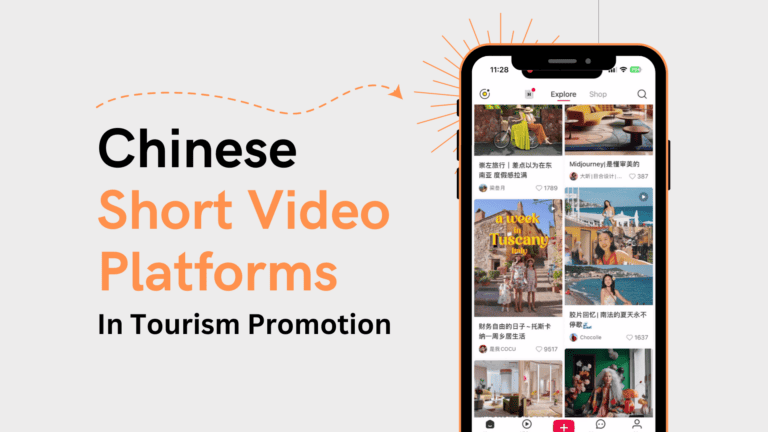
Chinese outbound tourism spending reached $277 billion in 2025 according to UNWTO, roughly double what US travelers spend globally. Average spend per trip sits at $2,100 per person. The luxury segment is growing faster than the overall market: affluent Chinese travelers increasingly choose 5-star resorts over standard hotels and are willing to pay premium prices for the right experience and the right photos to post afterward. That last part is not a joke. Xiaohongshu and Douyin are where these travelers show off their holidays to their friends and business contacts. A visually striking luxury resort has a natural advantage on these platforms.
According to COTRI’s 2025 data, the top 4-star and 5-star resort destinations for Chinese outbound travelers are Italy, the Philippines, Thailand, and Indonesia. Thailand alone welcomed back over 9 million Chinese visitors in 2024, with the luxury resort segment seeing the fastest recovery of any accommodation category. These markets are competitive. Being visible on the right Chinese platforms is the difference between capturing this traffic and watching it go to your competitors.
For more context on market size and projections, COTRI’s analytics platform publishes quarterly data on Chinese outbound travel by segment and destination.

Chinese travelers and luxury: what they actually want
Chinese luxury travelers trust brands they already know. Names like Four Seasons, Six Senses, Mandarin Oriental, and Rosewood carry strong recognition because these groups are also present in China. That familiarity converts. For properties that are less well-known in China, building that recognition through digital channels is the only realistic path. There is no shortcut.
Chinese luxury travelers are also looking for properties where they can take outstanding photos. The pool shot, the overwater villa, the mountain view at sunset. This content is what they share on Xiaohongshu and Douyin and it drives other travelers to book. Your resort’s visual identity on Chinese platforms is as important as your rooms and service levels.
Reviews matter enormously. Chinese customers need to see real feedback from real guests before finalizing a booking. A resort with 10 reviews and a 4.2 rating will lose to one with 200 reviews and a 4.5 rating every time, even if the first property is objectively better. Managing your review presence on Ctrip and Mafengwo is not optional. It’s a direct revenue lever.
The platforms you need to be on
Xiaohongshu (RED): number one for luxury discovery
RED is where Chinese affluent travelers go to discover luxury resorts. Visual content, KOL reviews, real guest posts. Here’s what works:
- Visual storytelling. Post high-quality photos and short videos of rooms, pools, dining and local experiences. This builds desire before they ever visit your Ctrip listing.
- Trusted reviews and social proof. Encourage past guests to post on RED and tag your resort. Authentic reviews from real guests carry more weight than branded content on this platform.
- KOL partnerships. Working with luxury travel KOLs gives your resort visibility among the right audience. Their followers trust their recommendations, especially for high-value decisions like a resort stay.
- RED Ads targeting. Use the ad platform to reach users searching for luxury travel inspiration in your destination. The targeting options are specific enough to reach genuinely high-intent travelers.
- Direct engagement. Answer questions in comments and DMs. Show that your resort is attentive and responsive. This matters especially for high-value bookings where trust is everything.
Our Xiaohongshu RED marketing service covers all of this for luxury hospitality brands.
WeChat: your direct line to Chinese luxury travelers
WeChat is the most used social media in China, messaging, payment, and booking all in one. Every luxury resort should have an Official Account. A potential guest will follow you to get the latest news and access your WeChat mini-program: a mobile-optimized booking interface built inside WeChat itself. With a mini-program, guests can book rooms, reserve excursions, order in-resort services, and access destination information without ever leaving the app. Learn more about setting this up through our WeChat marketing service.
WeChat Groups are also underrated for luxury resort marketing. Build a travel enthusiasts group and share: travel tips, destination highlights, VIP deals, guest experiences, and live streaming invitations. This is community building, and it pays off over time.
Fliggy (Alibaba): the booking platform to add
Alibaba’s travel booking platform Fliggy is accessible directly from Alipay. Chinese users can search for hotels, read reviews, and book directly with Alipay payment. Fliggy also supports live streaming, so your resort can run virtual tours of facilities and rooms for travelers in the pre-booking research phase. Once they’re convinced, the booking and payment happens in seconds. Being listed and optimized on Fliggy is a direct booking channel you shouldn’t ignore.
Ctrip / Trip.com: number one Chinese OTA for luxury
Ctrip’s hotel section has a luxury resort filter that helps High Net Worth Individuals (HNWIs) find properties that meet their standards. Getting listed here with strong photos, detailed descriptions, and an active review profile is the baseline. It’s not glamorous, but Ctrip generates a large share of international hotel bookings from Chinese travelers. Don’t neglect it.
Mafengwo: the community review platform
Mafengwo is a Chinese travel forum with over one million user-generated travel guides and six million ratings and reviews. Travelers use it to research destinations before booking. Getting your resort mentioned in Mafengwo content, whether through organic user posts or seeded reviews, builds credibility with travelers who are doing serious pre-trip research.
| Platform | Role in luxury resort marketing | Priority |
|---|---|---|
| Xiaohongshu (RED) | Discovery, visual content, KOL reviews | Essential |
| CRM, bookings, mini-program, loyalty | Essential | |
| Ctrip / Trip.com | OTA bookings, luxury filter, reviews | Essential |
| Fliggy | Alibaba ecosystem, live streaming, Alipay booking | High |
| Mafengwo | Community reviews, destination research | High |
| Douyin | Video discovery, KOL campaigns | High |
| Baidu | Search visibility for Chinese web users | Medium |
How CTA Helps You Reach Chinese Consumers
Douyin (TikTok China): We create luxury resort content for Douyin: cinematic room tours, resort experience clips, KOL partnerships. Short video on Douyin is how affluent Chinese travelers form their first impression of a property. We handle the brief, the creators, the paid boosting, and the reporting.
Xiaohongshu (RED): We manage Official Accounts for luxury hospitality brands, run KOC seeding programs with real travelers staying at your resort, and produce the kind of aspirational lifestyle content that gets saved and shared. RED is where luxury travel decisions start in China and we know how to put your resort in the right conversations.
WeChat: We set up and manage Official Accounts, build mini-programs for direct booking and loyalty, integrate WeChat Pay, and run CRM campaigns to re-engage past guests. For luxury resorts, WeChat is the direct relationship channel that drives repeat visits and referrals.
See all our China digital marketing services
Pedro Wang founded Chinese Tourists Agency in Shanghai in 2012. Since then his team has run campaigns for tourism boards, luxury hotels and startups across Europe and Asia. His China market knowledge comes from 15+ years on the ground.



WHY ARE WE A LUXURY CAMP imperial glory lodge Moroccoo
WHAT MAKES US DIFFERENT.
WRITE US
We respond as soon as we can !
https://imperialglorylodges.com/en/