
Cambodia Chinese Tourism 2026: From Volume to Value — A Strategy Worth Following
About the author: Pedro Wang is the founder of Chinese Tourist Agency. He has studied Southeast Asia’s Chinese tourism recovery with a focus on Cambodia, whose market has distinctive characteristics — including a Chinese diaspora business community in Phnom Penh and Sihanoukville that creates unusual bilateral economic and cultural dynamics.
How Cambodia Plans to Grow Its Chinese Tourism Market — and What Operators Need to Do to Benefit
Cambodia’s post-COVID tourism recovery has been deliberately designed around higher-value visitor attraction rather than pure volume restoration. The country’s tourism ministry has explicitly stated a target of growing Chinese visitor average spend from approximately $700 per trip to $1,200 per trip by 2027 — a 70% increase that requires significant changes to what Cambodia offers and how it presents itself in Chinese markets.
This strategic shift — from volume to value — is one of the more interesting policy experiments in Southeast Asian tourism, and Cambodia has structural advantages in executing it. Angkor Wat’s world-class status, expanding luxury lodge capacity, and improved air connectivity from Chinese secondary cities create a foundation that the old group-tour, commission-driven model never fully exploited.
The New Chinese Visitor Cambodia Is Targeting
Cambodia’s Chinese tourism authority describes its target visitor as the “三高” (three highs) Chinese traveler: high income, high education, high travel experience. This traveler has already been to Thailand and Vietnam. They are looking for something different. Cambodia’s positioning — ancient civilization, authentic Southeast Asian culture, and genuine wildlife access — speaks directly to what this traveler is seeking.
The Tonle Sap lake ecosystem, which supports one of the world’s largest floating villages and extraordinary bird life, is a natural experience category that the three-highs Chinese traveler responds to strongly. Chinese eco-travelers who have done African safaris are increasingly interested in the Mekong region’s biodiversity, and Cambodia’s Cardamom Mountains and Tonle Sap wetlands are genuine-grade wildlife destinations.
Growth Opportunities in Specific Chinese Traveler Segments
Luxury cruise on the Mekong River between Cambodia and Vietnam is growing fast as a Chinese experiential travel category. Chinese travelers who are moving past land-based itineraries and looking for slow travel formats — multi-day river cruise, changing scenery, high-quality onboard accommodation and food — find the Mekong route one of the most distinctive in Asia. Operators positioned on this route with Chinese-language service see strong Chinese booking conversion.
Khmer cooking class and culinary tourism. Cambodian cuisine is significantly underrepresented in Chinese food travel media. A dedicated Chinese-language culinary guide to Cambodia — amok (coconut milk fish curry), bai sach chrouk (pork rice breakfast), nom banh chok (rice noodles) — does not currently exist at quality. The operator who creates this content in Chinese will own Cambodian food tourism in Chinese digital media.
Solutions: Cambodia Operators Positioning for Growth
Luxury accommodation expansion and Ctrip listing. Cambodia’s luxury lodge sector has expanded significantly since 2020. Properties in remote Cardamom Mountain locations and on private river islands offer experiences that Chinese adventure-luxury travelers specifically seek. Ctrip listing for these properties, with Chinese-language wilderness experience descriptions, is the direct path to this segment.
Chinese-language Angkor guide specialization programs. The quality and language capability of Chinese-speaking guides at Angkor varies enormously. An operator who invests in a certified, specialist Chinese-speaking guide — one who can narrate the bas-relief stories in detail, explain the hydraulic engineering, and connect the Khmer Empire narrative to things Chinese visitors already know — differentiates from every other Angkor operator immediately.
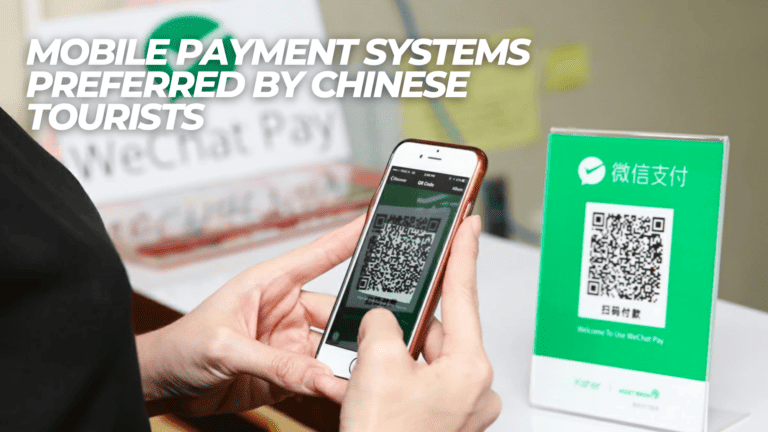
WeChat mini-program for seamless Siem Reap booking. A WeChat mini-program that allows Chinese visitors to pre-book temple pass, sunrise taxi service, recommended restaurants, and sunset cocktail experience at Angkor all in one place — in Chinese, payable in RMB before departure — would be the most useful Chinese travel product in Cambodia and does not currently exist.
Example Found on Chinese Web (Translated)
From a Mafengwo travel note by user 柬埔寨美食日记 (Cambodia Food Diary), titled “金边三天:你可能低估了柬埔寨的饮食文化” (Three Days in Phnom Penh: You Probably Underestimate Cambodia’s Food Culture), 3,800 likes, December 2024:
“I went to Cambodia expecting temples. I left thinking about fish amok. The National Museum in Phnom Penh has an extraordinary Angkor-period collection that most Chinese visitors skip because they have already been to Siem Reap. That is a mistake. The old Russian Market at 7am, before the heat, has street food that costs 50 cents and tastes like a cuisine you have never encountered. Cambodia’s food is not Thai food. It is something older, quieter, with coconut milk and lemongrass used in proportions that produce specific flavors no other Southeast Asian cuisine matches. I came for the ruins. The ruins are excellent. But I am coming back for the fish amok.”
FAQ: Cambodia Chinese Tourism Growth 2026
What is Cambodia’s Chinese tourism target for 2027?
The Cambodian tourism ministry targets 2.5 million Chinese visitors annually by 2027, with average spend per visitor of $1,200 — up from approximately $700 in the recovery period. The strategy emphasizes quality over volume, specifically targeting the FIT and luxury segments.
Are direct flights from China to Cambodia increasing?
Yes. Phnom Penh and Siem Reap both receive direct flights from multiple Chinese cities. Increased air capacity from second-tier Chinese cities (Chengdu, Chongqing, Wuhan, Xi’an) is creating Chinese visitor growth from regions that previously required Beijing or Shanghai connections.
What is the most significant infrastructure challenge for Chinese tourism growth in Cambodia?
Payment infrastructure. Chinese travelers are accustomed to mobile payment acceptance everywhere. Cambodia’s cash economy is improving but still has gaps, particularly outside Phnom Penh and Siem Reap. Operators who solve the Chinese payment friction problem have a significant competitive advantage.
Work With Us
Chinese Tourist Agency helps Cambodian and Southeast Asian operators position for high-value Chinese visitor growth. Our experience spans Angkor lodge marketing, Mekong cruise Chinese strategy, and culinary tourism content development for the Chinese market.





I’m glad to receiving your email requesting for Tourism information in Tanzania particular this time the world tourism is badly affected by pandemic disease (COVID 19).
Tanzania whoever remain the safe place to visit despite the challenge. Third Tours Tanzania offers quality and very affordable safaris service, mountain climbing services , day trips and cultural tours services in Serengeti National park, Ngorongoro crater, Lake Manyara National park, Lake Natron conservation area, Tarangire National park, Mkomazi National park, Kilimanjaro trekking, Ol-donyo Lengai active volcano trekking and all tours to Tanzania. third tours believes that our experience and knowledge ensure unique,exiting, and unforgettable safari experience. You may give your tentative plan and destination of your interest for Safari , Beach holiday , Day & Cultural tour. We shall respond to you immediately.
Third tours have put in Place hygienic measures to counter the spread of the covid 19. This should ensure your safe stay in Tanzania. yoanks again for your time and hopeful I shall hear from you soonest. You may contact me in Whatssap Mobile No. +255745773407 to join with us as partnership