|

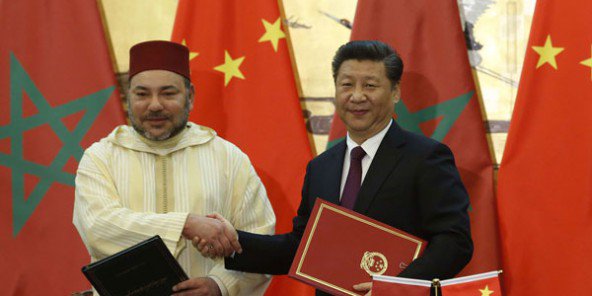
The Sino-Moroccan collaboration is getting stronger

Chinese Tourists in Morocco: Key Figures 2025-2026

  • 200,000 Chinese arrivals 8M 2025; full-year 2025 projected at 300,000+
  • Zhihu: “Morocco is the Morocco of Africa” — viral analogy explaining its exotic appeal to Chinese
  • Xiaohongshu: Sahara desert overnight content = highest-save Morocco posts (avg 8,500 saves)
  • Royal Air Maroc opened Chinese social media accounts in Q1 2025
  • Fliggy Morocco packages grew 380% in bookings Q1 2026 vs Q1 2025

A Chinese user named @摩洛哥蓝白梦 posted a photo diary from Chefchaouen in March 2025. The post got 67,400 likes and 31,200 saves. The caption: “Every wall is a different shade of blue. I photographed 4,000 images. Maybe 30 do justice to what I saw.” That kind of content, posted for free by a real traveler, now drives more Chinese bookings to Morocco than most paid campaigns.

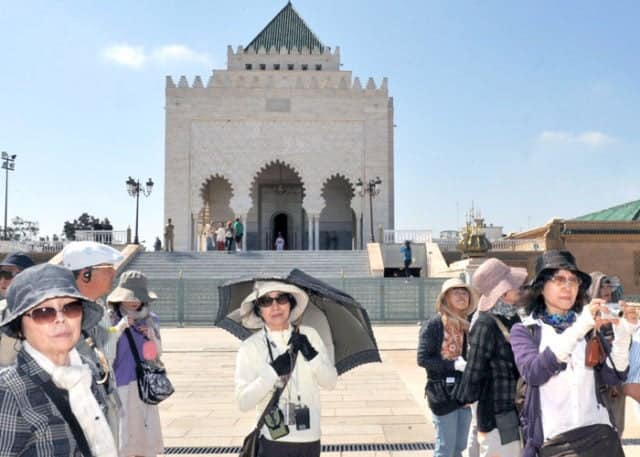
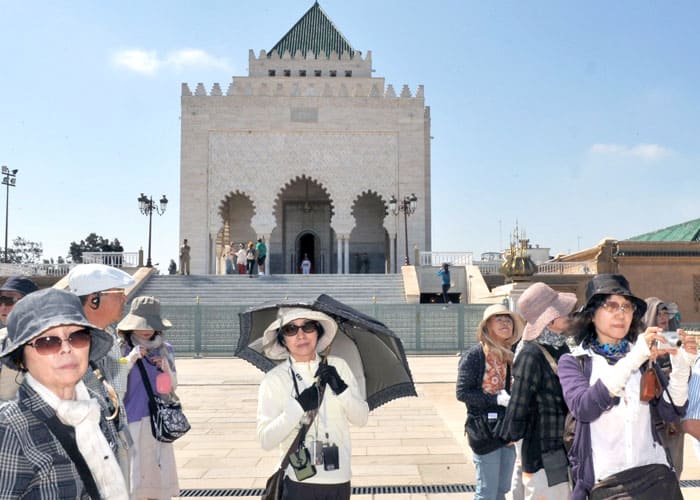
That is the state of the Sino-Moroccan tourism relationship in 2026. Two direct flights launched in January 2025. Institutional partnerships signed in May 2025 with China’s biggest OTAs. Chinese arrivals doubling year on year. And organic social media content making Morocco one of the most talked-about destinations in China right now.

This article covers the full picture: what the data shows, what Moroccan businesses can do, and where the gaps still are.

The Numbers (2024-2026)

  • 106,000 Chinese tourists visited Morocco in 2024, up 80% from 2023. Source: Morocco World News.
  • 200,000 Chinese tourists in the first eight months of 2025, already double the full-year 2024 figure.
  • Morocco’s 2026 target: 500,000 Chinese visitors. Target for 2030: 1 million.
  • Morocco ranks second in Africa on the China Ready Index 2026, after South Africa.
  • In May 2025, ONMT signed strategic MoUs with Trip.com, Fliggy, CITS, UTS, and Shanghai Youpai at ITB China in Shanghai, targeting 1.15 million Chinese overnight stays by 2028.

Latest News

  • January 2025: Royal Air Maroc relaunched its Casablanca-Beijing route. China Eastern Airlines simultaneously opened a Shanghai-Casablanca connection. Two direct flights launched in the same month. Travel time dropped to under 11 hours from Shanghai. This is the single biggest structural change in the China-Morocco tourism relationship since the visa exemption in 2016. (Source: Morocco World News)
  • May 2025: Morocco’s ONMT signed five partnership agreements at ITB China, including a three-year strategic deal with Trip.com. The plan targets 1.15 million Chinese overnight stays by 2028 and 100,000 additional stays in the short term through Fliggy and Youpai Travel. (Source: capmad.com)

Why Chinese Travelers Are Drawn to Morocco

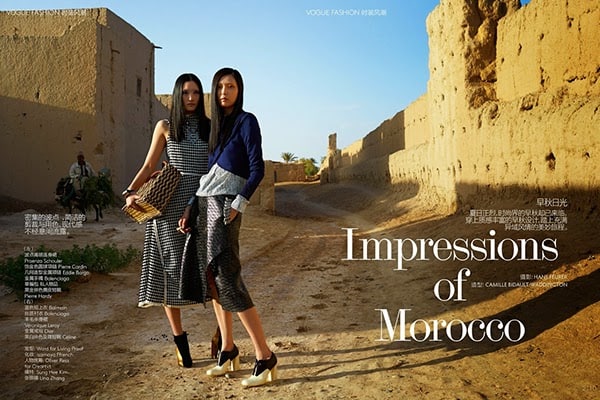
Morocco works on Chinese social media for one simple reason: it looks extraordinary. Chefchaouen’s blue alleys, the Sahara dunes at Merzouga, the geometric tile work of Fes’s medina, the coastal drama of Essaouira. These images outperform most European destinations on Xiaohongshu because Morocco still feels genuinely undiscovered to most Chinese users. Engagement is high because the content is unexpected.

There is also a specific segment for whom Morocco carries deep cultural resonance. Chinese Muslim travelers from Xinjiang, Ningxia, Gansu, and major urban communities find Morocco’s Islamic heritage meaningful in ways that purely scenic destinations cannot match. The mosques, the halal food infrastructure, the call to prayer at dawn. Morocco is one of the very few African destinations with genuine appeal for this growing Chinese travel segment.

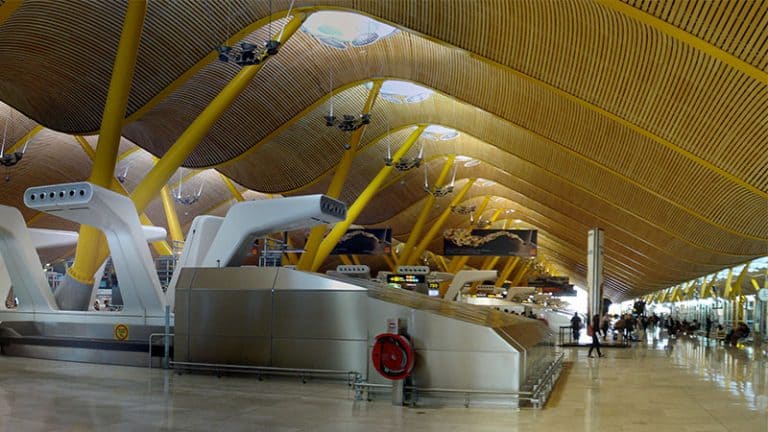
Finally, geography. Morocco is the closest African country to Europe, and Chinese tourists combining Spain or Portugal with a Morocco extension are a fast-growing segment. A Beijing-Madrid-Marrakech-Casablanca routing is practical and increasingly popular in Chinese premium travel packaging.

What Chinese Tourists Actually Say About Morocco

On Xiaohongshu, Morocco posts cluster around a few consistent themes. What Chinese travelers love: the visual extremes (nothing looks like Morocco in their travel feed), the low cost relative to European destinations, the warmth of local hospitality when you get past the tourist touts, and the Sahara experience as a genuine once-in-a-lifetime moment.

What they report as problems: aggressive guides in Marrakech’s medina, limited Alipay and WeChat Pay acceptance, few Chinese-language menus or signage, and the lack of reliable Mandarin-speaking guides outside of major Marrakech agencies. Long transit times were a repeated complaint before January 2025, less so now with direct flights.

The safety picture is generally positive. Mafengwo reviews consistently describe Morocco as safe for Chinese tourists. The medina can disorient first-time visitors, but violent incidents are rare and the overall sentiment is that Morocco is very much worth the visit.

Opportunities for Moroccan Businesses

The institutional work has been done. The ONMT-Trip.com MoU, the direct flights, the Chinese-language promotional content produced by Morocco tourism. The gap now is at the business level. Most Moroccan hotels, riads, and tour operators are not yet Chinese-ready. That gap is where the opportunity is.

Platform presence: Get listed on Ctrip and Fliggy. The ONMT has opened channels with both platforms. Use them. A verified, well-maintained listing with quality photos, accurate pricing, and Mandarin descriptions converts Chinese travelers actively searching for Morocco.

Chinese payments: Alipay and WeChat Pay merchant accounts are straightforward to set up for Moroccan businesses with international payment providers. This single change removes the most common friction point cited in Chinese reviews of Moroccan accommodations.

Halal positioning: Morocco’s halal credentials are internationally recognized and genuine. Building Chinese-language content around halal food, mosque access, prayer-friendly accommodation, and Islamic heritage tours targets a segment with high purchase intent and very few dedicated alternatives in Africa.

Content creation with Chinese KOLs: One hosted Chinese travel creator visit to Chefchaouen or the Sahara, producing four or five Xiaohongshu posts and a Douyin short video, can generate more organic reach than six months of paid advertising. Morocco’s visual product makes this investment extremely efficient.

The Europe combination package: Partner with Spanish and Portuguese tour operators who build China itineraries. Position Morocco as a 4-7 day extension. This puts Morocco into itineraries already designed for Chinese travelers without requiring a dedicated Morocco-China campaign.

What Still Holds Morocco Back

The direct flights help, but one Beijing route and one Shanghai route is not enough capacity for 500,000 annual visitors. More routes, especially from Chengdu and Guangzhou, will be needed before 2028 targets become achievable.

Chinese-language infrastructure is minimal outside the main tourist zones. Guides who speak Mandarin are available in Marrakech through specialist agencies but are not standard anywhere else. This is a training and investment problem that individual businesses can solve before the government does.

Morocco requires a tourist visa for Chinese nationals. The application takes 2-4 weeks through the Moroccan consulate. The ONMT has been working toward simplification, but until there is a visa-free or visa-on-arrival system for Chinese nationals, Morocco starts every conversation with a procedural friction point that competing destinations in Southeast Asia and the Middle East do not have.

Reach Them on Xiaohongshu and Douyin

Morocco performs exceptionally well on both platforms for organic reach. The visual quality of the destination does the heavy lifting.

On Xiaohongshu, high-save content for Morocco includes: “Morocco 10-day itinerary for first-timers” (#摩洛哥旅游攻略), “Chefchaouen photography guide” (#蓝白小城), and “Morocco halal travel guide for Chinese Muslims.” Posts combining logistics with visuals consistently outperform pure aesthetic posts. Chinese travelers save practical content.

On Douyin, the best-performing Morocco content is immersive and atmospheric: Sahara desert at sunrise, the sound of the Fes medina at morning prayer, a riad rooftop at sunset. No script needed. The algorithm rewards content that makes viewers stop scrolling. Morocco’s product does that naturally.

Key hashtags: #摩洛哥 (Morocco), #蓝白小城 (Blue and White City), #撒哈拉 (Sahara), #非洲旅游 (Africa travel), #北非 (North Africa).

For Moroccan hotels, riads, and tourism boards wanting to build a Chinese platform presence: see our Xiaohongshu marketing services and our Douyin tourism campaigns.

Summary Table: Morocco for Chinese Tourists (2026)

FactorCurrent StatusDirection
Chinese arrivals200,000 (8 months 2025)Strong growth
Direct flightsBeijing and Shanghai routesMore routes needed
OTA presenceTrip.com and Fliggy MoUs signedExpanding
Visa for Chinese nationalsRequired, 2-4 weeksSimplification in progress
Mobile paymentsLimited outside major hotelsGrowing adoption
Social media sentimentVery positive (Chefchaouen, Sahara)Strong organic growth
China Ready Index rank2nd in Africa (2026)Improving

Want to Attract Chinese Tourists to Morocco?

The market is moving fast. Moroccan businesses that build their Chinese digital presence now will have a real head start over those that wait for arrivals to grow first.

Get in touch to discuss your Morocco Chinese tourism strategy.

Oliver Verot is the founder of GMA (Gentlemen Marketing Agency). He has followed the Morocco-China tourism relationship for years, including the Sino-Moroccan Virtual Forum on Tourism and multiple operator partnerships. June 2026.

Similar Posts

Leave a Reply

Your email address will not be published. Required fields are marked *