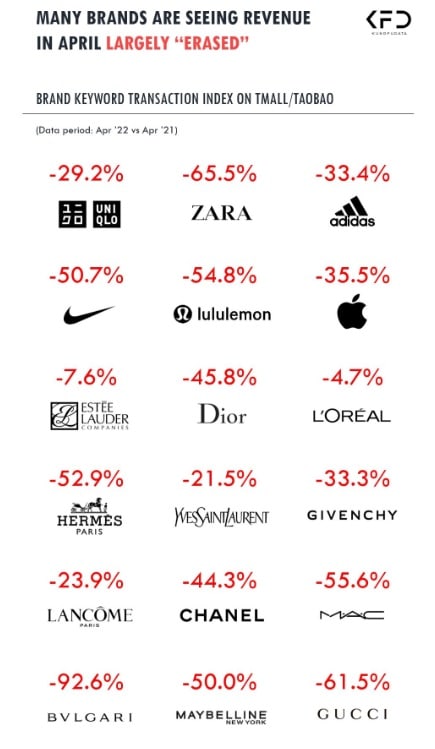
The Lockdown has huge impact on Chinese e-Commerce

Have you ever wondered why Chinese consumers seem to have higher digital expectations than almost any other market in the world. Part of the answer is COVID. China’s lockdowns between 2020 and 2022 were longer, stricter, and more sudden than almost anywhere else. Entire cities were locked down with days or even hours of notice. Supply chains collapsed and recovered. And through all of it, Chinese consumers adapted their behavior in ways that permanently changed how they shop, travel, and interact with brands. In 2026 the effects of that period are still shaping the market, and if you want to reach Chinese consumers, you need to understand what changed and why it’s permanent.

What the Lockdowns Actually Changed

China’s lockdown periods did not just push people online temporarily. They accelerated behaviors that were already developing and pushed them past the point of no return. Three shifts in particular became permanent:

First, live commerce became normal. Before 2020, live streaming sales were primarily a niche entertainment format on platforms like Taobao. By 2021, they had become the dominant sales channel for entire product categories. During lockdowns, brands and individuals who had never streamed before launched channels out of necessity. Consumers who had never bought from a live stream tried it and found they preferred it. In 2026 live commerce accounts for over 20% of China’s total e-commerce volume, and that share is still growing. This is not a trend that will reverse.

Second, private traffic took off. When physical retail closed, brands that had invested in WeChat contact lists and private groups could still communicate directly with their customers. Brands that had only relied on public platform reach lost contact entirely. The contrast was so stark that by 2022 almost every serious Chinese brand had a private traffic strategy. In 2026 building your own WeChat audience is considered basic operational hygiene, not a bonus strategy.

Third, premium preferences intensified. Chinese consumers who had been locked at home, unable to travel or spend on experiences, accumulated purchasing power and shifted it toward higher-quality products. Premium food, premium skincare, premium home goods, and premium experiences all saw sustained demand increases post-lockdown that haven’t softened. In 2026 Chinas digital market is particularly strong for international brands that can credibly position themselves as high quality and worth the premium. Value-only propositions are increasingly squeezed by domestic competition.

The Live Commerce Normalization: What It Means for Your Brand

Chinese consumers who buy via live stream expect several things that are different from standard e-commerce: a host they recognize and trust, real-time answers to product questions, exclusive discounts available only during the live session, and a sense of event (the feeling that watching now and buying now is different from browsing a product page later).

For international brands, this means that simply listing products on Chinese e-commerce platforms is no longer enough. Your competitors are hosting weekly live sessions. If you’re not, you’re losing on discovery and conversion to brands that are. The entry point is lower than you might think: a consistent weekly Douyin session with a Chinese-speaking host, a solid product range, and a few real-time offers can start generating meaningful results within three to four months. You can explore our WeChat Advertising Guide for tips on how live commerce integrates with your WeChat presence.

Super-App Integration: Where Commerce Lives in 2026

Another permanent change from the lockdown period: Chinese consumers now expect to complete entire commercial transactions inside a single app. WeChat, Douyin, and Alipay all expanded their commerce capabilities significantly during 2020-2022 because the demand was there. In 2026 a Chinese consumer can discover a foreign travel destination, watch a live tour, book and pay for a trip, receive their confirmation, and contact the hotel’s customer service team, all without leaving WeChat.

For international tourism and hospitality brands, this creates a very specific requirement: you need a WeChat Mini Program that handles booking or inquiry, or you’re creating friction at the moment of conversion. Chinese consumers who can’t complete a transaction in WeChat often don’t complete it at all. They move to the next option that is fully integrated.

Chinese Consumer Expectations in 2026: What Post-Lockdown Buyers Want

Post-lockdown Chinese consumers have specific expectations that have become standard:

Speed and flexibility: Lockdown experiences taught Chinese consumers that plans can change without warning. Booking policies with no flexibility are a hard barrier. Travel brands that offer easy date changes, full refunds, and clear cancellation processes see significantly higher conversion from Chinese buyers than those with rigid policies.

Digital-first service: Waiting on hold, filling in paper forms, or sending emails are experiences Chinese consumers have minimal patience for. WeChat-based customer service with fast response times is the baseline expectation in 2026. Premium brands are expected to respond in under two hours during business hours.

Authentic storytelling: Post-lockdown Chinese consumers, having spent years limited to digital experiences, are hungry for genuine, vivid accounts of what an experience is actually like. Content that feels real, personal, and specific outperforms polished brand advertising across all platforms. This is true on Douyin WeChat and Little Red Book are the top platforms for this style of content, but it applies everywhere. See our guide on Chinese outbound tourism strategy for how this applies specifically to travel brands.

Key Trends to Know in 2026

  • Live commerce expanding into services and experiences: Travel packages, hotel stays, and dining experiences are now routinely sold via live stream on Douyin and Taobao Live, not just physical products.
  • Premium brand preference holding strong: Post-lockdown appetite for quality international brands has not faded in 2026. Chinese consumers who upgraded during 2022-2023 have largely maintained those habits.
  • Revenge spending shifting to experience categories: After years of limited travel, Chinese outbound tourism spending in 2025-2026 is growing faster than any other consumer category, with an emphasis on premium and exclusive experiences.
  • Private traffic maturing as a CRM tool: WeChat private groups have evolved from informal contact lists into structured loyalty programs, with automated messaging, tiered membership, and direct purchase mechanics.
  • Content authenticity expectations rising: Chinese consumers can spot generic branded content instantly. In 2026 user-generated content and influencer reviews that feel real consistently outperform polished brand advertising.
  • Contactless and digital-first experiences expected: Hotels, attractions, and tourism operators that offer QR code check-in, WeChat-based service requests, and digital vouchers see stronger satisfaction ratings from Chinese visitors.
  • Social proof through short video becoming standard: Before booking any international experience, Chinese consumers increasingly check Douyin or Little Red Book for recent authentic video reviews from other Chinese travelers.

What Our Expert Says

“The COVID period was brutal for everyone, but it left Chinese consumers with digital habits and expectations that are now just the baseline. The brands that are winning in China in 2026 are the ones that internalized this and adapted. They host regular live sessions. They have private WeChat groups. They produce authentic short videos. They offer flexible booking. These aren’t extras anymore, they’re the price of entry. International brands that are still operating in China the way they did in 2019 are wondering why growth is slow. The answer is that the consumer moved, and the brand didn’t.”

Philip Chen, CTA Senior Consultant.

How Les Arches Blanc Ski Resort Found Its Chinese Audience During a Lockdown

Thomas Renard had been marketing manager at Les Arches Blanc, a mid-size ski resort in the French Alps, for seven years when COVID brought everything to a halt in 2020. The resort had always drawn a small but growing number of Chinese visitors: perhaps 200 to 300 per season, mostly part of organized tour groups who included Les Arches Blanc as one of several stops during a broader French Alps itinerary. Thomas had always assumed that growing the Chinese segment would require more partnerships with Chinese tour operators and that it would be a slow, relationship-driven process.

When the 2020-2021 ski season was cancelled and the 2021-2022 season deeply uncertain, Thomas found himself with unusual amounts of time and a sudden urgency to find alternative revenue sources. A friend who worked in digital marketing in Lyon suggested he try Douyin. “I had never heard of it,” Thomas said. “I thought she meant TikTok.”

She connected him with a small Chinese-French agency in Paris that specialized in tourism content for Chinese platforms. Their pitch was simple: Chinese consumers locked down at home were consuming travel content at record volumes. A ski resort in the French Alps was exactly the kind of aspirational destination they were dreaming about. You don’t have guests right now, but you can start building an audience that will be ready to book when they can travel again.

Thomas was skeptical but had little to lose. They started a Douyin account for Les Arches Blanc in November 2020 and launched a content series called “La Montagne t’attend” (The Mountain is Waiting). The premise was deliberately personal: Thomas himself, speaking in simple French with Chinese subtitles, walking around the empty resort and describing what it would feel like to be there. The gondola with no queues. The restaurant with empty tables set for dinner. The piste groomed and silent in the early morning. It was melancholy but also beautiful, and it resonated deeply with Chinese viewers who were themselves locked down and dreaming of where they would go next.

The first video got 8,000 views. The second got 22,000. By January 2021, their channel had 14,000 followers, all in China. Comments flooded in from Chinese users saying they had bookmarked Les Arches Blanc for when they could travel again, asking about snow conditions, pricing, and what to expect as a first-time skier in France.

Thomas and the agency noticed the first-time skier questions and pivoted. They produced a series specifically for Chinese viewers who had never skied: what to wear, how to rent equipment, what the beginner slopes look like, how the French ski culture works. This high quality content series got their most-watched videos, including one that reached 180,000 views showing Thomas falling on a beginner slope and laughing about it. Authenticity, again.

When French borders reopened to Chinese tourists in late 2023, Les Arches Blanc had 67,000 Douyin followers and an active WeChat Official Account with 4,200 subscribers. They had been offering a newsletter in Chinese for eight months with content about the upcoming season. When the 2023-2024 season opened, they had pre-bookings from Chinese visitors that were 340% higher than their best pre-COVID season. Chinese visitors were no longer 200-300 per season in organized groups. The 2024-2025 season saw over 1,200 Chinese visitors, most of them booked independently through WeChat or Douyin’s new travel booking integrations.

“We used to think the way to grow the Chinese segment was through B2B: tour operators, travel agencies, group deals,” Thomas said. “COVID forced us to try something completely different. We went direct to consumer on platforms they actually used. And the audience we built during the lockdowns turned out to be the most loyal, highest-value Chinese guests we’ve ever had.”

How CTA Can Help You

CTA specializes in helping international tourism and consumer brands adapt to the post-COVID Chinese digital environment. Here is what we offer:

  • Douyin tourism content production: We create 3-4 short-form videos per week for your resort, destination, or hotel, designed specifically for Chinese consumer discovery. Scripts, filming direction, subtitles, and posting strategy included.
  • Live commerce sessions for travel bookings: We produce and host monthly Douyin live events where a Chinese-speaking host walks your Chinese audience through your destination, answers questions in real time, and offers exclusive booking incentives.
  • WeChat audience building strategy: We design your private traffic funnel from first Douyin view to WeChat follower to booking, with optimized touchpoints at every stage.
  • WeChat Mini Program for bookings: We build your WeChat-based booking tool, allowing Chinese visitors to inquire, book, and pay without leaving the WeChat environment.
  • Post-visit content strategy: We set up a system to encourage Chinese visitors to share their experiences on Douyin and Xiaohongshu after their trip, generating authentic user content that drives future bookings.
  • Chinese consumer journey audit: We map your current Chinese visitor experience from digital discovery to arrival to post-trip, and identify every point where the experience doesn’t meet 2026 Chinese consumer expectations.

Discover what we do at CTA’s advertising services in China.

About CTA

CTA (Greater Marketing Agency) has been helping international brands reach Chinese consumers since 2012. We worked with tourism destinations through the COVID period and saw firsthand which brands emerged stronger and which didn’t. The ones that invested in building Chinese digital audiences during downtime came out with a major advantage. Today we apply those lessons to every new client we take on, whether they’re starting from zero or rebuilding after a period of inactivity. Over 500 brands have worked with us. Many of them are in travel, hospitality, and consumer goods, and all of them needed a China-specific approach that Western digital playbooks couldn’t provide.

About the author: Claire is a Digital Marketing Specialist at CTA. She has spent 6 years working with hotels, brands and destinations to attract Chinese travelers and consumers. She writes about what actually works in the Chinese market in 2026. Want to know more? Visit our services page.

Useful Chinese Sources

CNNIC (中国互联网络信息中心) tracks the evolution of Chinese internet usage and e-commerce behavior over time, including the documented behavioral changes from 2020 to 2026. Their longitudinal data on live commerce adoption and super-app usage patterns is the most authoritative source available.

iResearch (艾瑞咨询) publishes China’s live commerce market size reports and tracks private traffic growth across platforms. Their post-COVID consumer behavior studies from 2023-2025 document the permanent shifts in Chinese purchasing habits that this article covers.

Similar Posts

Leave a Reply

Your email address will not be published. Required fields are marked *