Serbia’s national airline has started flights to China’s Tianjin
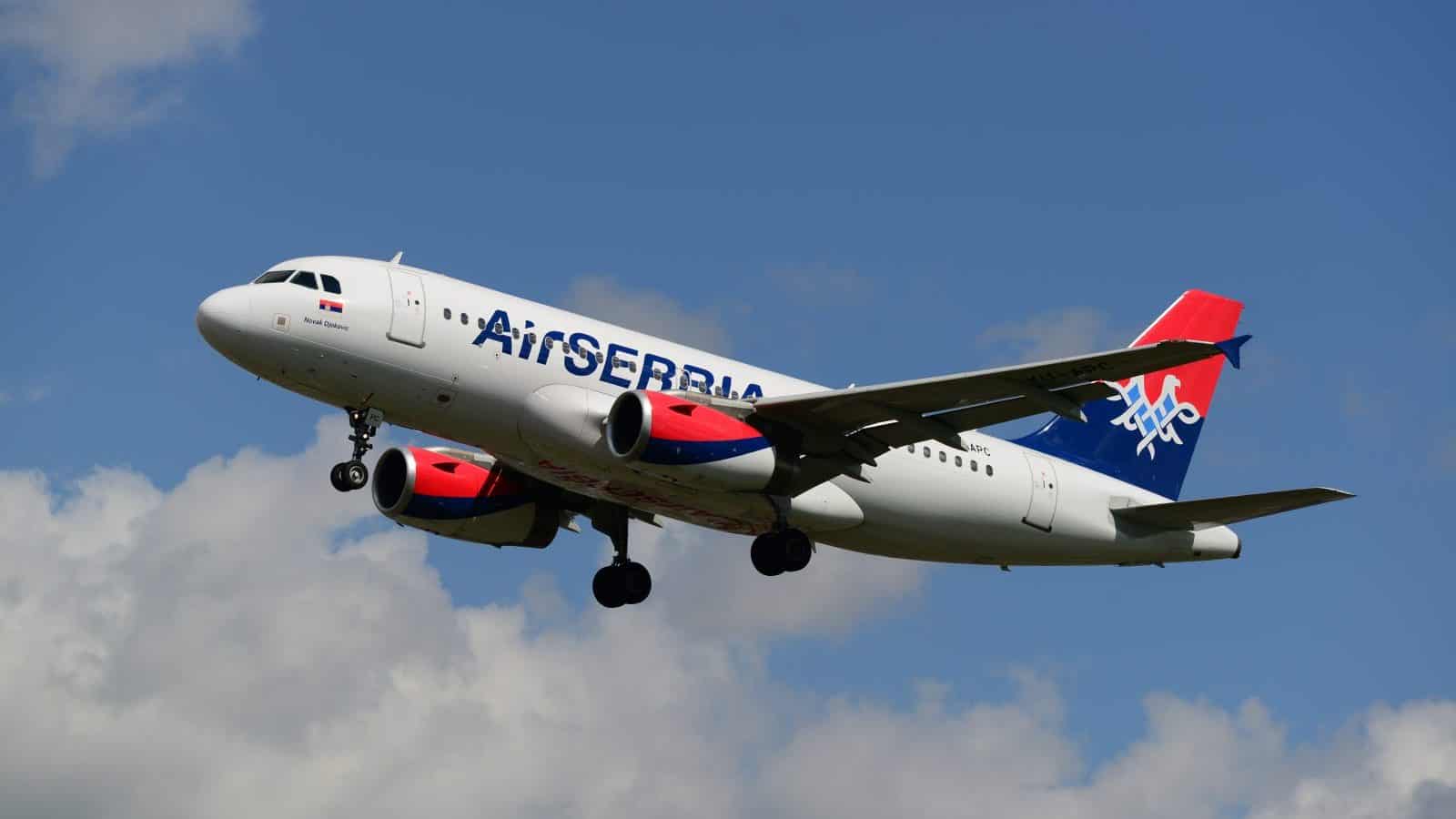
President Aleksandar Vučić of Serbia has announced that Air Serbia would begin operations between Belgrade and Tianjin, China. The action is in response to Hainan’s statement that it would begin service between Beijing and Belgrade. The route is scheduled to begin in October, but government approval is needed.
These flights will deepen the relationships between Serbia and China, which are currently developing. The two nations are now engaged in free trade negotiations, and it is anticipated that an agreement will be finalized by the end of the year.
The president of Serbia stated, “This is a positive conclusion, as we will draw many more tourists and businesspeople, but it will also bring China closer to Serbia, as I am certain that a higher number of Serbian tourists, businessmen, and government officials would utilize this service.”
Tianjin is a port city located south of Beijing that connects the capital of China to the East China Sea.
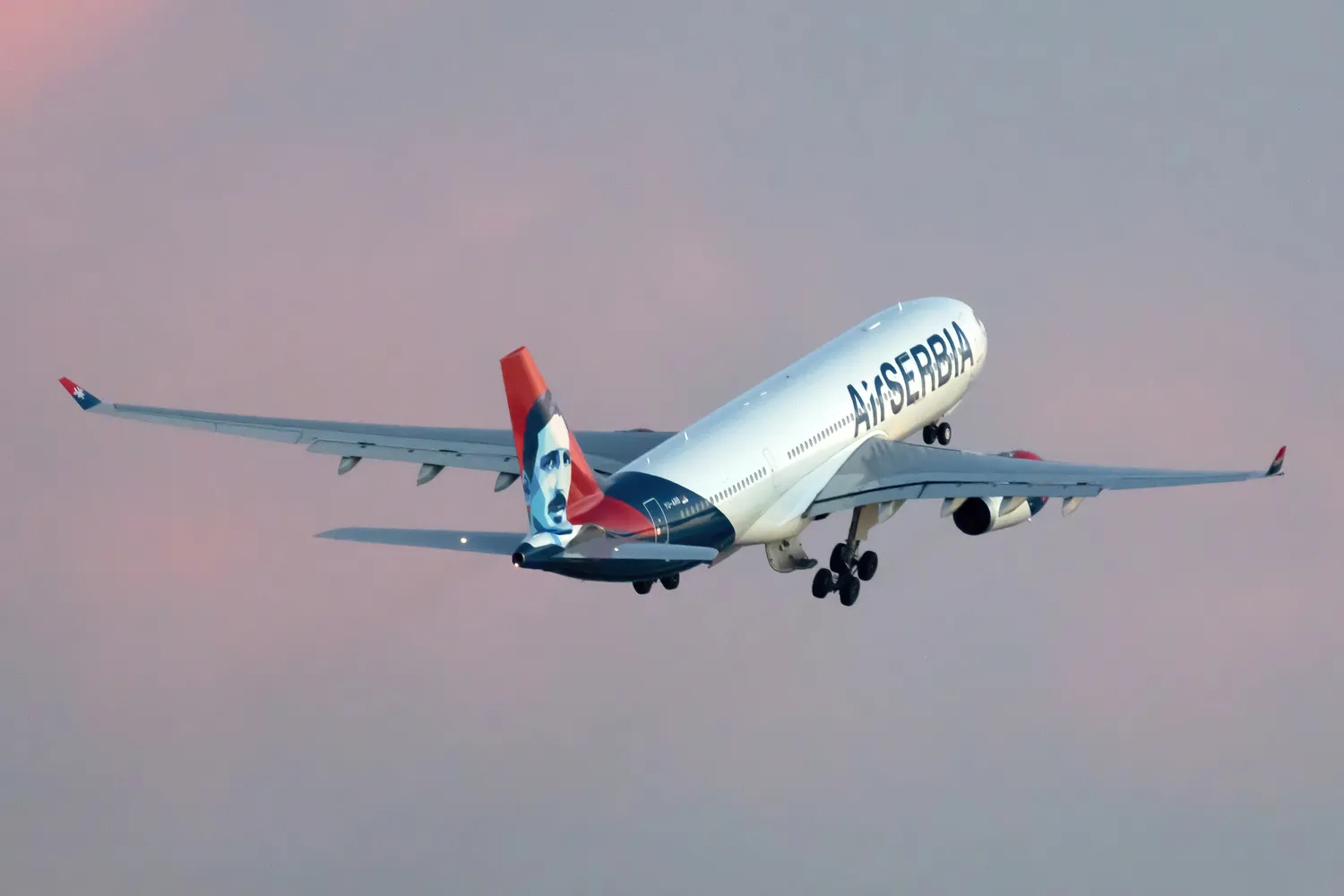
Air Serbia aims to operate this route with its Airbus A330-200. Air Serbia is notable for being one of the few European carriers permitted to enter Russian airspace. Moreover, Air Serbia continues to fly to Moscow and St. Petersburg. Therefore, traveling between Serbia and China over Russia will not be a problem.
Hainan Airlines Flight
The inaugural Hainan flight between Beijing and Belgrade and Belgrade to Dalian took place yesterday. This service will operate each Saturday. As a result of the COVID-19 outbreak, aircraft from Belgrade will connect in Dalian before continuing on to Beijing.
The CEO of Air Serbia and the president of Serbia welcomed the inaugural flight in Belgrade. The 10-hour flight was completed by an Airbus A330-300 belonging to Hainan Airlines.
In 2017, Hainan Airlines flew from Beijing to Belgrade through Prague. Due to the COVID-19 epidemic, this route was suspended in 2020.
Chen Bo, Chinese Ambassador to Serbia, stated, “It was a privilege to fly on the inaugural nonstop flight from Beijing to Belgrade. These flights will strengthen Belgrade’s status as a regional center. I’d like to thank Air Serbia in particular for its cooperation with the launch of these services, and I look forward to seeing them in China as well “.
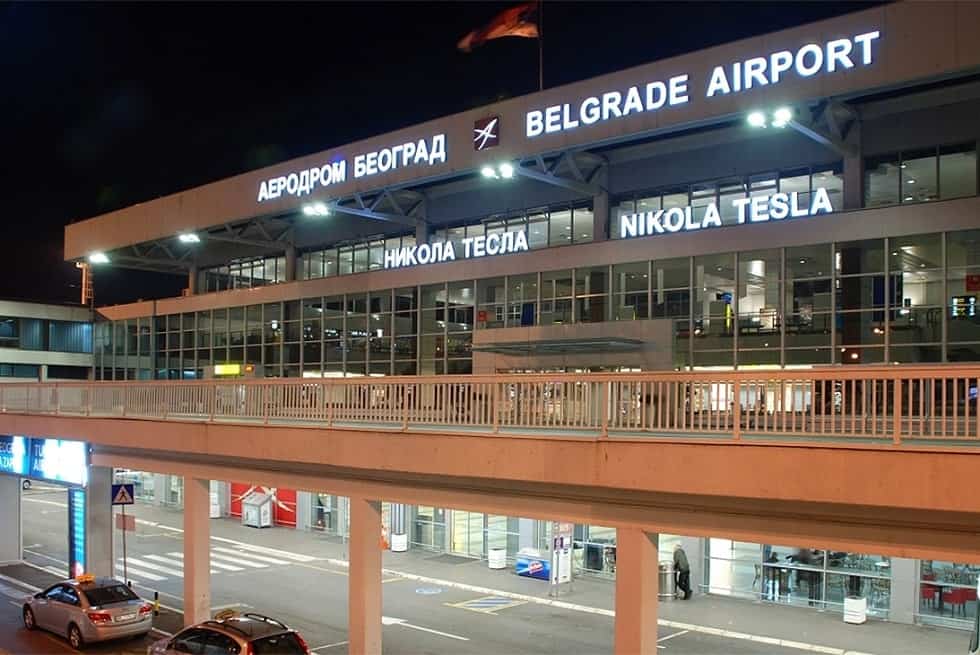
Air Serbia is not the only airline that operates service to Tianjin. The Polish airline LOT began weekly flights from the Polish capital Warsaw in 2021. In order to send Chinese laborers to Serbia, there have been chartered flights between Tianjin and Belgrade throughout the past year.
Tianjin Airport is a relatively small airport that primarily serves domestic destinations. Air China and Tianjin Airlines are the two largest carriers at the airport. Hainan Airlines began regular service to Vancouver, Canada, in 2018. Nonetheless, the flight was terminated in 2019. Tianjin is also home to an Airbus final assembly line.
It is envisaged that this new link will allow Chinese laborers and businesspeople to travel to Serbia. In addition, Air Serbia anticipates that more visitors will visit the country in Eastern Europe.
How to market airlines in China?
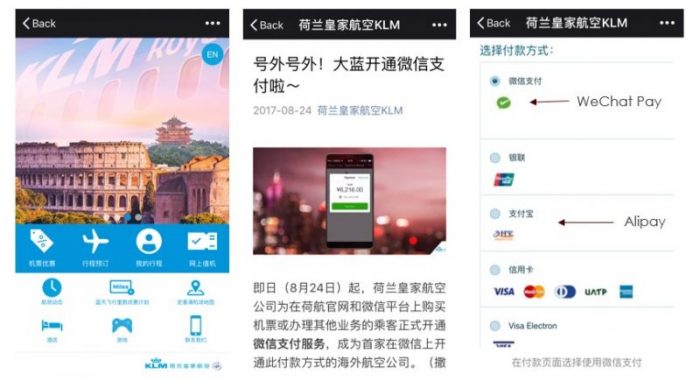
KLM Airlines take off his account WeChat
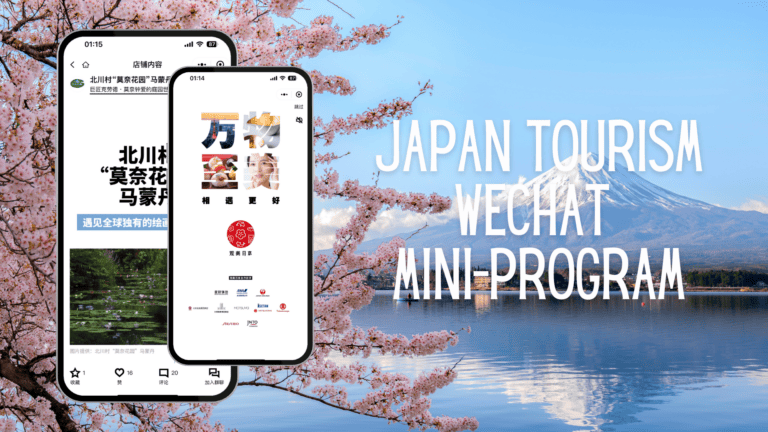
KLM Royal is devoted to serving its Chinese consumers. As a form of customer care for Chinese customers, KLM has selected We Chat as its most effective tool.
KLM uses WeChat to improve customer service with CRM tools. KLM has seen that the request process and customer feedback from Chinese consumers are handled twice as quickly. The company rapidly recognized the use of We Chat and acknowledges its effectiveness. With more than 630 million users, KLM’s presence on the most popular social network in China is crucial.
In fact, the Chinese market is a crucial market for the Dutch corporation, which facilitates over 100 million international travels annually. KLM is the entry point to Europe and would benefit from enhancing its services to Chinese customers. Martine Van DerLee, director of social technology, We Chat is the most popular platform in China, allowing us to engage with consumers and prospects.
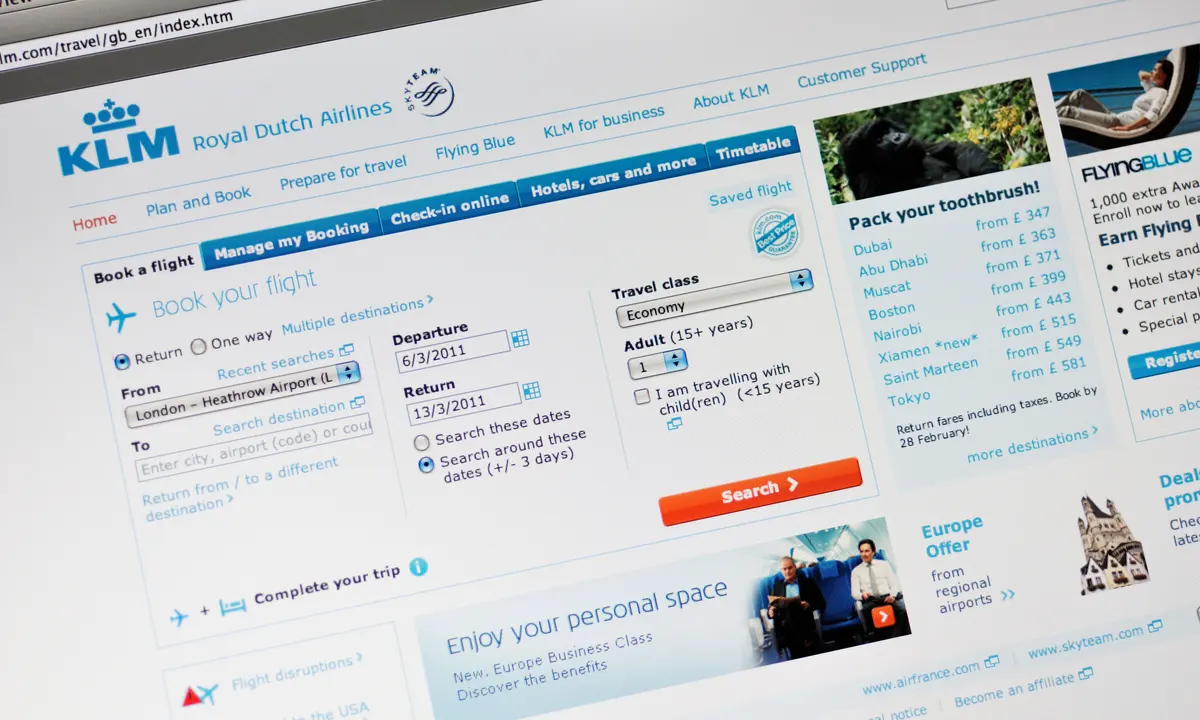
If we examine the websites of foreign firms such as Emirates, Air France, British Airways, and Singapore Airlines, we see that they are prepared to offer We Chat customer support around the clock. All of these websites include a Mandarin version, which is already a plus for attracting Chinese customers. Several websites, such as Air France, even tailored their content to the Chinese audience, depicting Paris as the city of love.
Many Chinese appreciate the opportunity to book their flight in Chinese; British Airways provides a Mandarin Chinese-language page for these customers.
While We Chat is a prominent social network in China, some businesses seek to differentiate themselves among Chinese consumers by utilizing other social media.
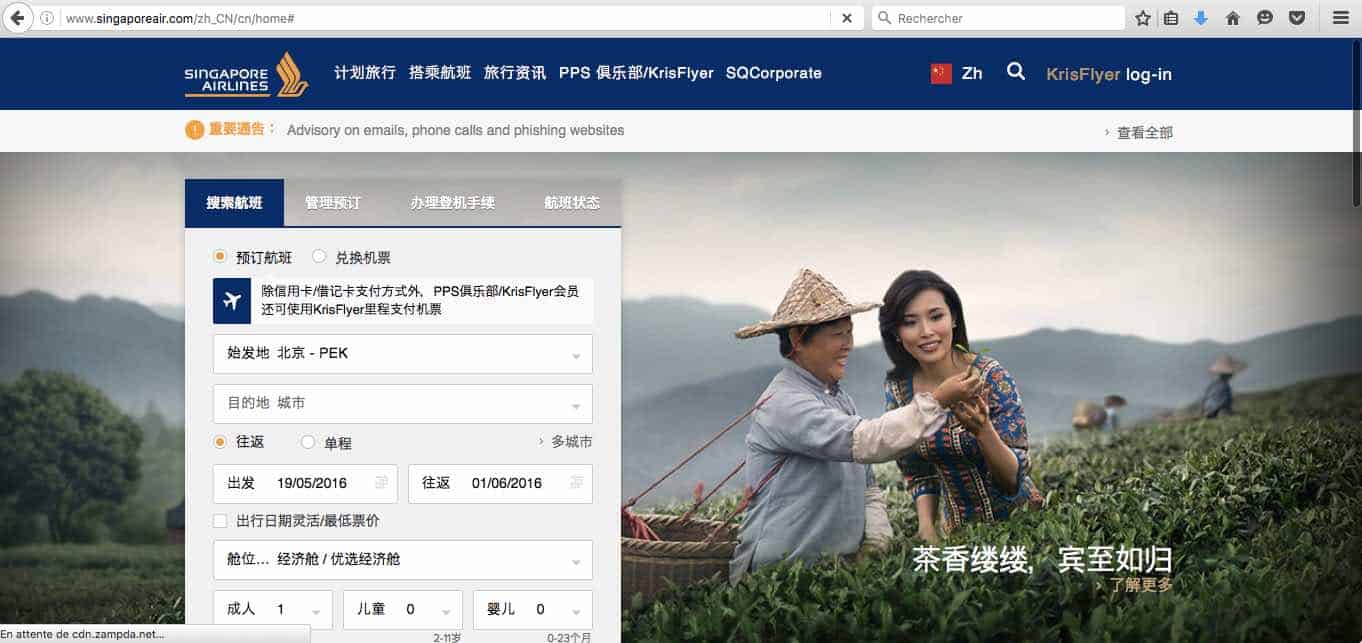
You can view Singapore Airlines’ Weibo page, a Chinese microblog sometimes likened to Twitter:
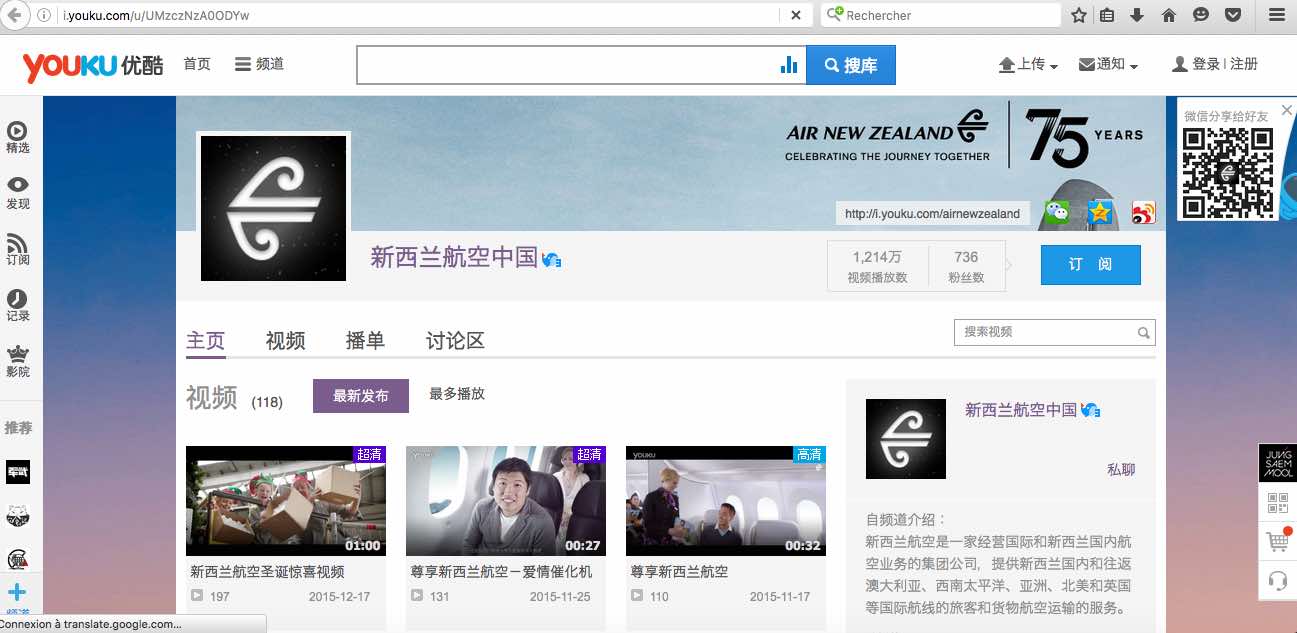
Or here the video channel of Air New Zealand on Youku (Chinese Youtube):
We all know that the Western social networks are blocked in China (Facebook, Twitter, Youtube, Google +), so there is no need to make marketing campaigns aimed at Chinese consumers above. It is best to position the Chinese own social networks to better capture the attention of consumers and reach other potential customers.
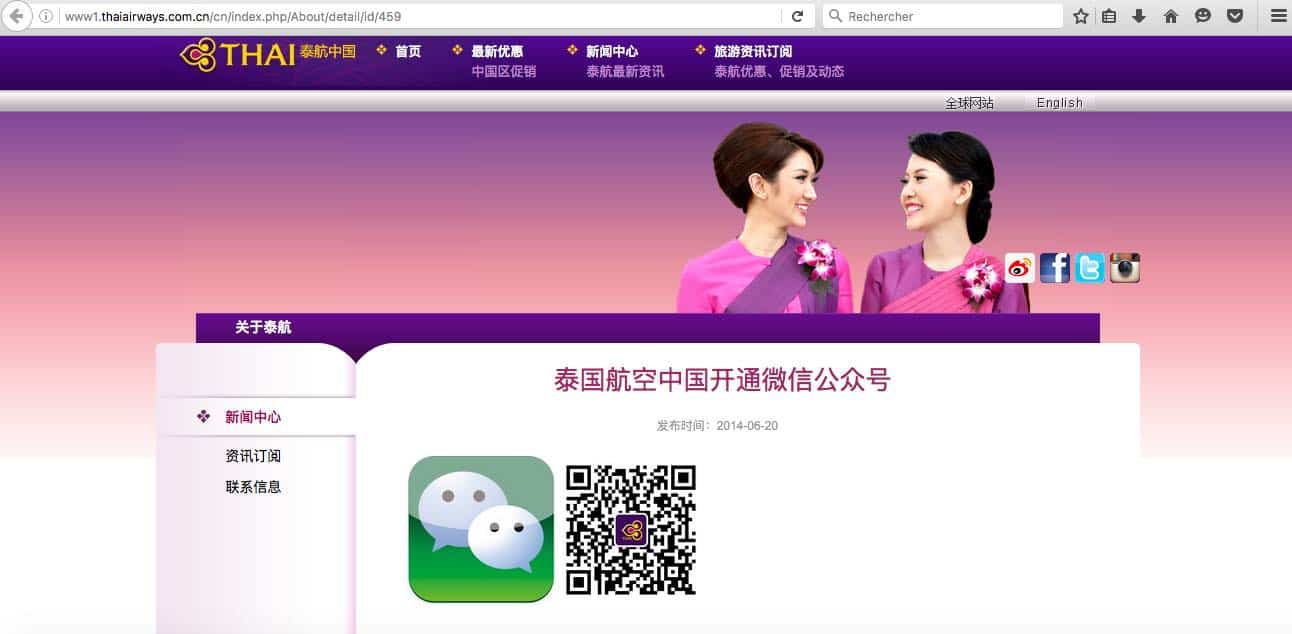
Apart from KLM, Thai Airways is the only airline to promote WeChat on its website.
Why WeChat is important?
Chinese customers are followers of the digital age, as seen by the prevalence of QR codes in China. In China, QR codes are omnipresent and are frequently scanned for promotions, passwords, and brand following. WeChat encourages numerous users to utilize QR codes for its operation. For example, QR codes can be used to add pals. Regarding the brands, the user can scan the QR code of a brand, and once connected, the user will view the content of their page adapted to the application format; this material may include news, promotions, and discounts. This facilitates client retention and interaction.
KLM’s WeChat account has 88,000 followers, an increase of between 0.5 and 1 percent per week! Through its efforts to serve its customers, its commitment to Chinese consumers, its advantageous trade discounts, and its inventive marketing strategies, the brand has been able to satisfy its Chinese consumers.
The popularity of QR codes in China shows that Chinese clients are avid users of the digital era. QR codes are ubiquitous in China, where they are routinely scanned to obtain information such as discounts, passwords, and brand loyalty. Many WeChat users are encouraged to use QR codes in order to make use of the app. QR codes, for example, can be used to connect with friends. It’s possible to connect to specific businesses by scanning their QR codes; once connected to the brand’s page, users will be able to see their content tailored to the application’s format, including news, promotions and discounts. This aids in the retention and communication of customers.
Our WeChat services
WeChat Account Registration & Branding
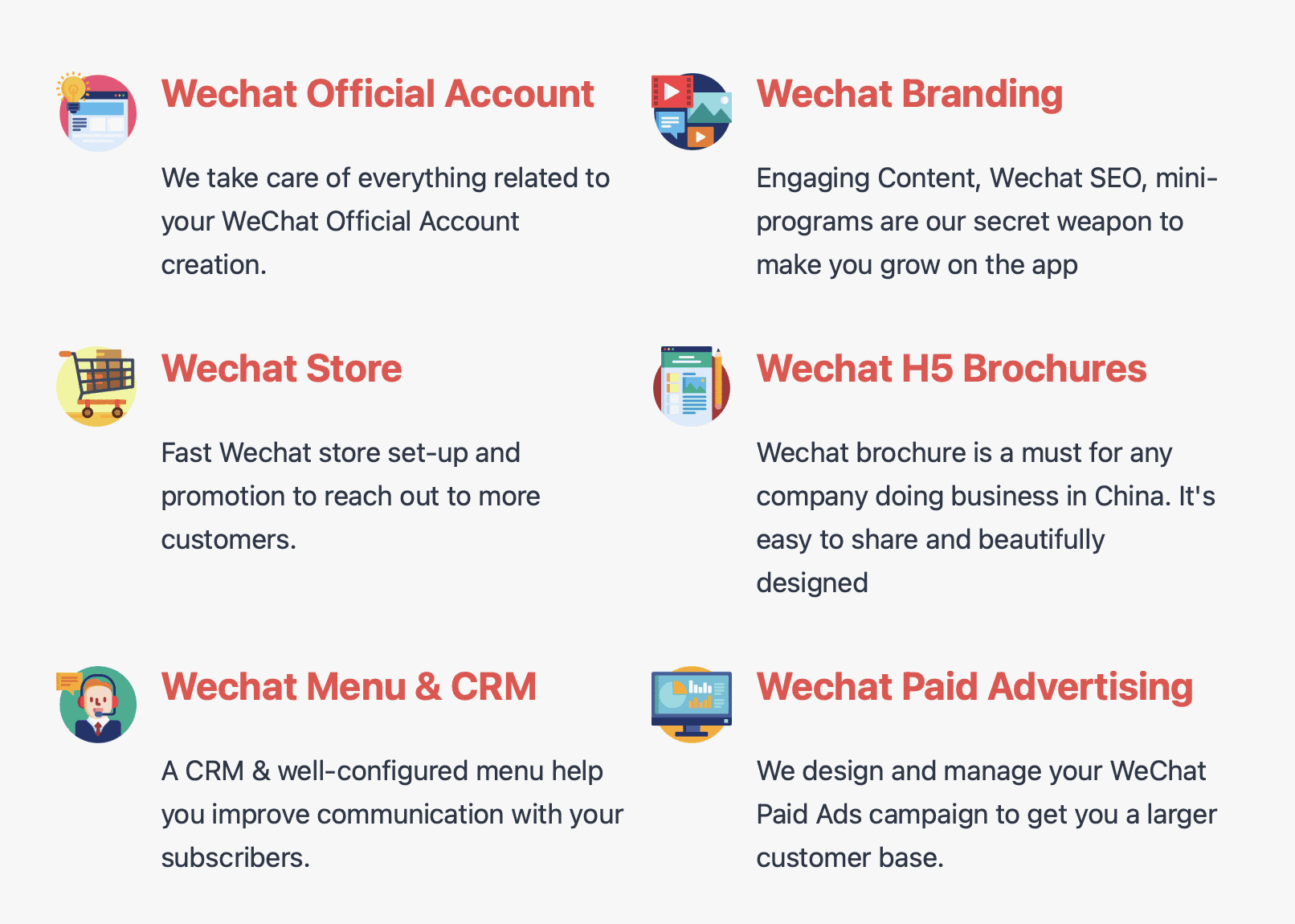
WeChat is the most popular social media platform in China. It has 1 billion monthly active users, making it an ideal place to promote your business or sell a product. Many businesses have yet to explore this new marketing avenue because they think that setting up WeChat as their own account may be difficult since foreigners are not allowed by law with only one exception: we can help! Behind every successful WeChat marketing campaign is a creative agency that has worked hard to make your business concepts a reality. Our team of experts helps you define the perfect “Social Media” strategy for your KPI and budget so you can stay ahead in this ever-changing world.
Wechat CRM
Official accounts on WeChat are getting more and more sophisticated. With the help of automated responses, you can now manage paid subscriptions through your account without having to send an email or social media message! This nifty feature will save time while providing fast service for all those who follow you–whether they’re subscribers or visitors.
Wechat H5 Brochures
If you’re looking to share your business with an audience on WeChat, a brochure is a perfect way! Indeed, WeChat H5 brochures are the most effective tool for sharing important information about your business. This could be your product list, company intro, service description or case studies, etc., and it replaces PDFs! WeChat is much more popular than email in China so we recommend having a Wechat brochure to give you an advantage at trade shows and exhibitions over expensive paper ones which tend not to get read.
Omni-channel Social Media Strategy
China is a thriving, bustling country. It seems as if they have an app for everything! WeChat might be great in some cases but it doesn’t cover your entire social media strategy needs. We recommend you use other apps besides Wechat to promote your business such as Weibo and Douyin. Our team will help you set up accounts on these platforms too so that they are managed correctly with content created specifically for them
WHY CHOOSE GENTLEMEN MARKETING AGENCY FOR YOUR WECHAT MARKETING?

We are the # 1 digital marketing and social media agency in China (Shanghai). We help you navigate the difficulties and intricacies of the Chinese market. Our knowledge, efficiency, network allows us to offer competitive prices for an international company looking to expand its business into Asia’s largest economy-China!