
Chinese tourists dream of adventures in 2023
After the borders are open, China’s richest and most seasoned travellers are ready to leave the stream of shopping tourists and explore a new kind of adventure according to a new report. The new Chinese adventurer is going to new destinations in 2023.
A new survey by the Hurun Report and travel agency DIADEMA surveyed 203 high flyers about their trips in the past three years in order to know how they’re managing their trips, from the planning to the booking or the destination.
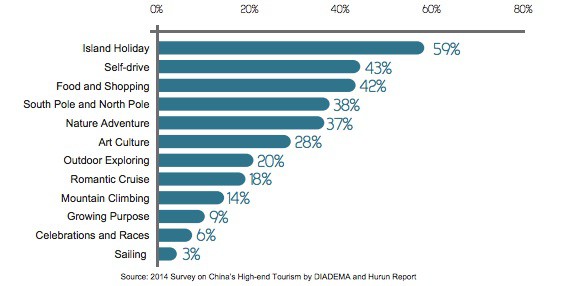
The study found that an increasing number of travellers are going to destinations like South America, Africa or the Poles. This new kind of traveller grows weary of the traditional shopping tour across the shopping capital of Europe and wants new experiences.

This new Chinese tourist seeks new experiences.
These new trips for these tourists are mostly holidays trips to islands and driving trips. We are talking about seasoned travellers with an average of 22 trips. They mainly try to seek out adventurous travels mainly in one of the following destinations: Artic, Antarctica, North Pole, South Pole and Africa as well as adventures into the wild. They tend to stay for 18 days and spend around 150000$ per trip
The study indicates that close relatives and friends are the muses for finding new travel destinations. However online booking sites such as Qunar or Ctrip are still very important when it comes to actual planning and booking. Meanwhile, travel agencies were chosen to be the main source of information for most adventurous travellers during their favourite trip of the year while 50% of all respondents book their hotel via travel agencies. In addition, 42% of the people asked in the study used third-party online booking and finally, only 28% used travel agencies to find a hotel room during such a crowded period.
Hotel Registration & Chinese OTA Agency
Inspiration and methods of booking
Comes to think of it, this is the logical evolution of the Chinese opening to the outside world: first, you go outside in a group, and once your knowledge of the outside world and your fear of the unknown is gone, you want to experience new things. Here we are at the dawn of a new period: Chinese are increasingly eager to go where the adventure is, to experience things they hadn’t before just as other countries did before them.
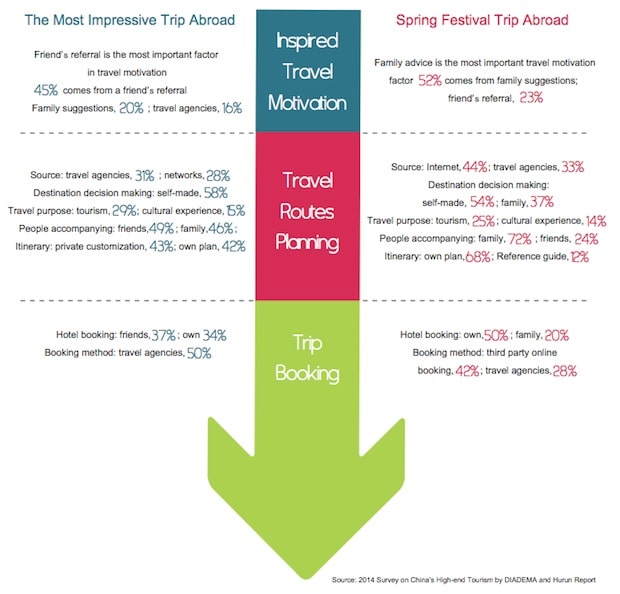
As the study shows family and friends are the prime factors influencing their decisions. This means that if a solution in web marketing could be designed to influence them one could influence large groups of tourists. The point would be not to aim at the tourists themselves but at their families. Networks such as WeChat, media and more global Internet Word of Mouth should work wonders here.
How to increase the number of bookings from Chinese?
????Expert tips:
- Optimize your website for Chinese visitors
- Register on Chinese OTA. Ctrip and Qunar are the best choice
- Spread the word about your accommodation and services in Chinese media
- Use Baidu Ads for more traffic
Want to attract more Chinese adventurers?
We can help you to connect with adventurous Chinese tourists!
 Contact us now to get a Free Consultation.








Very informative article that I must take advice serious in order to attract tourist from China into our company Denhum Holidays more so having it translated to Chinese language.