Are independent trips the new trend among the Chinese?
More than 70% of Chinese outbound travelers were FIT (Free Independent Travelers) in 2024. That is a complete reversal from a decade ago, when group tours dominated Chinese overseas travel. If your business still thinks of Chinese tourists mainly as people arriving on buses with a guide holding a flag, you are looking at yesterday’s market.
Independent Chinese travelers are now the majority. They book themselves, they move on their own schedule, and they spend more. For hotels, restaurants, and experience operators who want to attract this segment, the opportunity has never been larger. Here is what you need to know.
The Shift From Group to Independent: What the Numbers Show
In 2015, organized group tours represented approximately 65% of Chinese outbound travel. By 2019, that had dropped to around 52%. The pandemic years reshuffled everything, and when Chinese outbound travel recovered in 2023-2024, it came back with a much stronger FIT bias. By the end of 2024, official data showed FIT travelers at over 70% of all Chinese outbound trips.
What drove this shift?
- A new generation of more traveled, more confident Chinese tourists who have been overseas before and want to go deeper rather than wider
- The rise of Xiaohongshu and Douyin, which made it easy to plan independent trips using peer content
- Ctrip’s improvement of direct booking infrastructure, making it easier to book components separately
- Post-pandemic appetite for flexibility and control over one’s own itinerary
- Growing English proficiency among younger Chinese travelers
Who FIT Chinese Travelers Are
FIT Chinese travelers skew younger and higher-income than the group tourism average. The core profile:
- Age 22-42, with the largest concentration in the 25-35 bracket
- Urban professionals based in first and second-tier Chinese cities
- Household income above RMB 20,000 per month
- Often have prior overseas travel experience (university abroad, business trips, previous holidays)
- Comfortable booking and navigating independently in English-speaking countries
- Highly active on Xiaohongshu, Douyin, and WeChat
They travel in groups of 2-4: couples, friend groups, or small family units with young children. True solo travel exists but is a minority within FIT.
How FIT Chinese Travelers Plan Their Trips
The planning process for FIT Chinese travelers is specific and worth understanding in detail:
Xiaohongshu is the primary inspiration and research platform. Travelers search for destination names in Chinese and read through hundreds of detailed travel notes (游记) written by other Chinese travelers. These notes typically cover: where to stay, what to eat, what to see, what to avoid, how much things cost, and which experiences are overrated. A business that appears positively in multiple travel notes will attract bookings it never had to pay for.
Douyin fuels discovery. A short video of your city, your property, or your region can reach millions of Chinese users who were not actively searching for you. Douyin, and WeChat are both essential platforms, but for different purposes: Douyin for discovery, WeChat for relationship and booking.
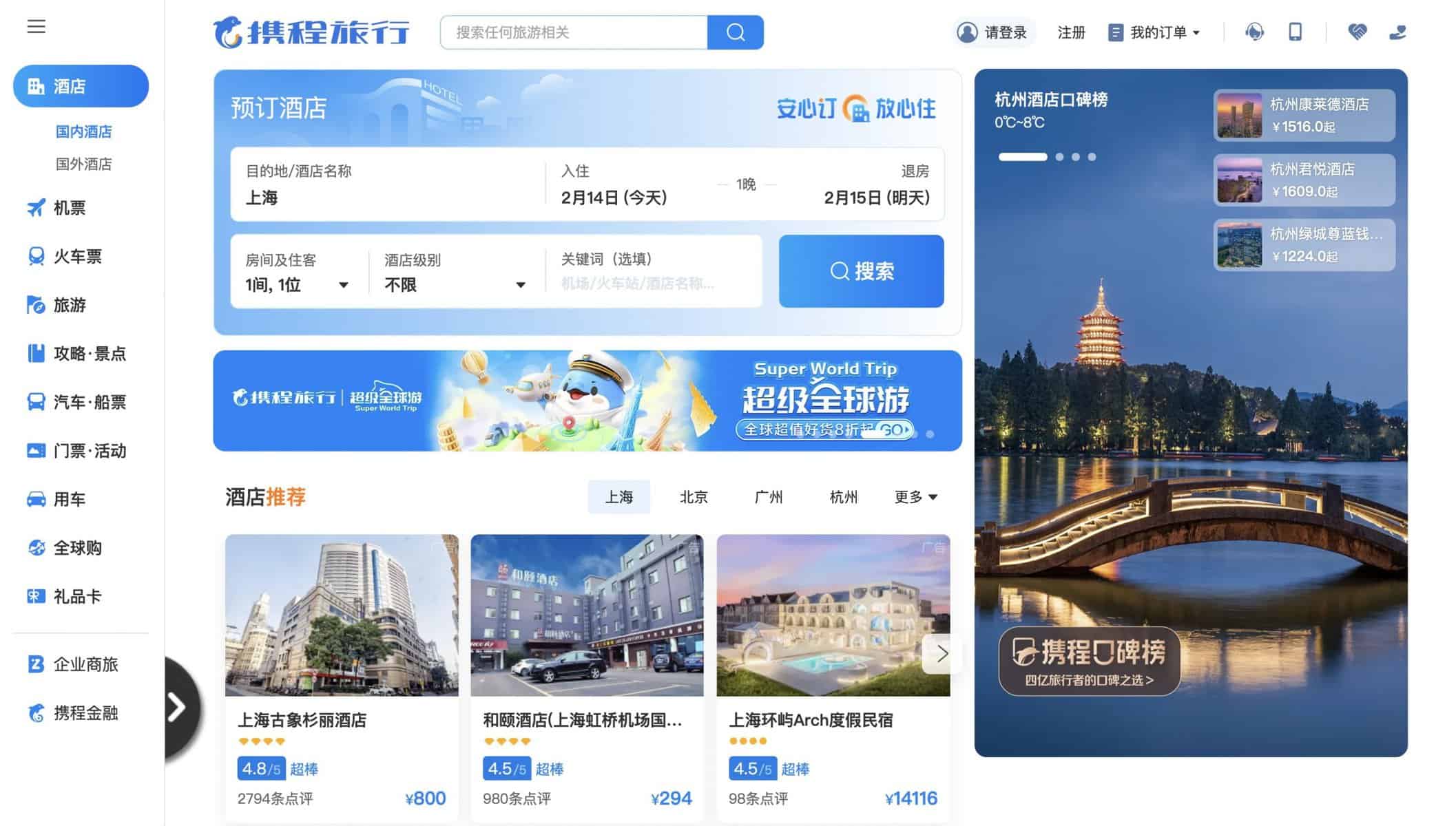
Ctrip and direct booking close the sale. Most FIT Chinese travelers use Ctrip to book flights and accommodation. But direct booking is growing for businesses that have Mandarin-language websites or WeChat mini-programs. FIT travelers who plan carefully often prefer direct booking for the flexibility it gives them.
Our guide on attracting Chinese tourists covers the booking path in more detail with specific platform recommendations.
What FIT Chinese Travelers Want From a Destination
FIT travelers have higher expectations than group tourists, but they are also more forgiving of imperfection when the experience is genuine. What they want:
- Local, authentic experiences they cannot get at home or in a tour group
- Flexibility: the ability to change plans, sleep in, or explore off-itinerary
- English-friendly environments: not perfect English, but enough to navigate
- Clear, accurate information in advance: directions, transport options, what is included
- WeChat or Mandarin communication option for questions and emergencies
- Good food, accessible for exploration on foot or public transport
What they actively avoid: rigid schedules, overcrowded tourist spots where everything is in English for Western visitors, and destinations with no Mandarin signage in areas where they are likely to get lost.
Key Trends 2026
- FIT Chinese travelers now represent over 70% of Chinese outbound trips, a majority that continues to grow.
- Xiaohongshu peer reviews are the most trusted information source for FIT trip planning, above official tourism websites and advertising.
- Direct booking with WeChat contact is growing for independent travelers who want flexible reservations.
- Japan, France, Italy, Portugal, and the UK are the top FIT destinations in Europe.
- FIT travelers stay significantly longer than group tourists: average 9.2 nights per trip vs 6.1 for group tours.
- English-friendly signage and transport is a deciding factor for destination selection among FIT travelers.
- Female FIT travelers, particularly solo or in small groups, are one of the fastest-growing sub-segments, now representing 41% of FIT trips.
What the Experts Say
“FIT Chinese travelers are the future of Chinese tourism for most destinations outside Asia. They spend more, they stay longer, they write better reviews, and they come back. The single most important thing you can do to attract them is to be findable and trustworthy on the platforms where they plan. Xiaohongshu is where the research happens. Ctrip or direct is where the booking happens. WeChat is where the relationship happens. If you have a presence on all three, you are ahead of 90% of tourism businesses in your market.”
Jon Wang, CTA Head of Digital Strategy.
How a Tuscany Guesthouse Got a 300% Surge in Chinese FIT Bookings
Marco and Giulia Ferretti run a small family guesthouse in the Chianti hills of Tuscany. Eight rooms, a pool, a vineyard, and a terrace with one of the views that makes people want to move to Italy permanently. They had a steady stream of European and American guests, good reviews on TripAdvisor and Booking.com, and a business that worked. Chinese guests were something they occasionally hosted when they came through a travel agent, but it was rare and unpredictable.
The problem was not the product. Tuscany is deeply loved by Chinese travelers. The rolling hills, the wine, the olive oil, the food: all of it resonates strongly on Chinese social media. The problem was that the Ferrettis were invisible to Chinese independent travelers planning a Tuscany trip. There was no Ctrip listing, no Mandarin page on their website, and no way for a Chinese traveler to contact them without a phone call in Italian.
The change started small. Marco and Giulia created a Ctrip listing for the guesthouse, translated the core property information into Mandarin with help from a freelance translator, and added accurate photos with Mandarin captions. They also created a listing on Booking.com with Chinese-language support enabled. Both listings were straightforward: accurate descriptions, realistic photos, clear pricing, and a WeChat QR code that guests could scan to reach them directly.
The WeChat QR code turned out to be the most impactful single change. They printed it on a small card that went into the check-in welcome envelope. Chinese guests scanned it, sent messages about the area, asked for restaurant recommendations, and shared the contact with friends who were also planning Tuscany trips.
After the first season with Chinese guests, Giulia asked each Chinese group if they would be willing to share their experience on Xiaohongshu or Mafengwo. Several did. One post, a photo diary from a couple who had stayed for 4 nights, got over 6,000 saves on Xiaohongshu and generated direct inquiries from 14 other Chinese travelers within a month.
Results over two seasons: Chinese FIT bookings increased by 300%, from an average of 4 Chinese guests per season to over 50. Chinese guests now represent 22% of annual revenue and have the highest average stay length (4.7 nights vs 2.9 for European guests). The guesthouse added a Chinese-language menu card for breakfast, a list of Mandarin-friendly restaurants in the area, and a small Chinese tea selection alongside the Italian espresso.
Marco: “We did not change what we are. We just made it possible for Chinese travelers to find us and trust us. The rest happened by itself.”
How CTA Can Help
CTA helps accommodation, experience, and destination businesses attract FIT Chinese travelers. Here is what we offer:
- Ctrip and Booking.com Chinese-language listing optimization
- Xiaohongshu account creation, content seeding, and peer review strategy
- WeChat setup for direct guest communication and mini-program booking
- Mandarin website page creation and Chinese SEO
- Douyin content strategy for destination and property visibility
- Full FIT Chinese traveler marketing strategy for your property or region
See everything we do at our CTA China advertising services page.
About CTA
Since 2012, CTA has helped 500+ brands enter and grow in the Chinese market. Our tourism clients range from individual guesthouses to national tourism boards. We understand FIT Chinese travelers deeply: where they look, what they trust, and what converts them from browser to booker. Our team works across Paris, Shanghai, and Singapore, with native Mandarin speakers at every stage of your campaign. We build real visibility on the platforms that matter.
About the author: Claire is a Digital Tourism Specialist at CTA. She has spent 6 years helping hotels, brands and destinations attract Chinese travelers. She writes about what actually works in 2026. Learn more at our services page.
Chinese Sources
文化和旅游部 (www.mct.gov.cn), China’s Ministry of Culture and Tourism, publishes the annual outbound tourism statistical report that tracks the shift from group to independent travel. Their 2024 data confirming FIT at over 70% of outbound trips is the primary source for this article’s market size figures.
携程 Ctrip (www.ctrip.com) provides real-time booking data across its platform and regularly publishes trend reports on Chinese traveler behavior. Ctrip’s 2025 FIT travel report covered destination preferences, average trip length, and booking behavior for independent Chinese travelers worldwide.