
Why Chinese tourists want to travel to Spain? (2020 update)
[et_pb_section admin_label=”section”]
[et_pb_row admin_label=”row”]
[et_pb_column type=”4_4″][et_pb_text admin_label=”Text”]
The Asian giant has become the most important source of tourists worldwide.
Culture, gastronomy and a good climate are the three main reasons why Spain is one of the most popular destinations for Chinese tourists.
In 2019 China outbound represented $257.7 billion in spending and an estimated 365 billion by 2025.
From all these Chinese travelers, only 0.24% (230.000) go to Spain. However, in 2013 Spain the number of Chinese tourists increased by 33% compared to 2012.
In 2018, Spain has been visited by 649,032 Chinese tourists. A 128% increase over the last three years. However, it only represents 0.8% of all the tourists Spain received that year. Looking at the growing figure we can only see the potential.

The Chinese who travel to Spain are usually from the upper-middle-class and stay longer there than in any other European country, with an average of over eleven days.
Let’s see together why Chinese tourists like to go to Spain:
History:
Generally, Chinese tourist don’t go to Europe looking for sun and beaches. They value the Spanish history because they consider that Spain has a long and very traditional history.
 Chinese tourists are very impressed by the flamenco and bullfighting and they consider them to be the most representative Spanish activities
Spanish museums are popular:
Chinese travelers like castles, palaces and parks and they love visiting museums. They are very interested in seeing masterpieces of well-known painters like Picasso, Gaudi, Dali, Velázquez, Goya …

Barcelona is the most popular city regarding Spanish architecture and art. “La Sagrada Familia”, a large Roman Catholic church and Gaudi’s works are some of the most impressive cultural attractions in Spain.
Shopping:
The Chinese tourist is the biggest spender, especially in luxury brands. About 82 % of Chinese tourists consider shopping as one of the main activities when they are traveling and they usually buy international luxury brands because in Spain they are 30% cheaper than in China.

According to the World Tourism Organization (WTO), Chinese visitors spent outside its borders over 100.000 million dollars last year. Cataluña and Madrid are their favorite destinations in Spain and they spent around 2040 dollars on average per capita.
Gastronomy:
The food is an important part of the Spanish culture, that is the reason why Chinese tourists are very curious about Spanish food. Paella is the most successful dish and also the most representative of Spanish cuisine. Usually, Chinese tourists love paella because is similar to their eating habits. In addition, they are very interested in Spanish wines due to their high quality.

However, there is a lot of potential that is still untapped to increase the appeal of Spain.
Chinese tourist have very specific needs :
- They want staff that can speak Mandarin Chinese
- Hotels they may want to have a kettle for boiling hot water for tea
- Chinese are tech-savvy, and like to share their travel experience in real-time. Wifi is crucial here.
- Shops and hotels should have the ability to use Union Pay because most do not use international credit cards
To increase the appeal of Spain to Chinese tourists you must show it as a premium destination.
Chinese travel forum
- Tuniu
- Mafengwo
- Qyer
Tuniu

Chinese tourists will go to forums and online communities such as Tuniu where there will look up information according to what kind of trip they want. There they will find reviews and advice about everything related to traveling.
Chinese tourists trust other reviews very much. Indeed they heavily rely on other people’s experience to see what destinations are the best, therefore you must make sure that they will only see good reviews about Spain and your tourism company services related to Spain by posting good reviews.
Mafengwo
Is the trip advisor of China. People talk about their experiences while traveling, you can review places, hotels, restaurants.You can find detailed guide on a destination, itinerary, etc
The app features forums and lively q&a.
It is also an OTA: You can book transports, hotels, tickets, etc. You’ll have access to more than 60 000 services all around the globe.
it is also a shopping mall, online e-commerce platform that focused on travel essential items.
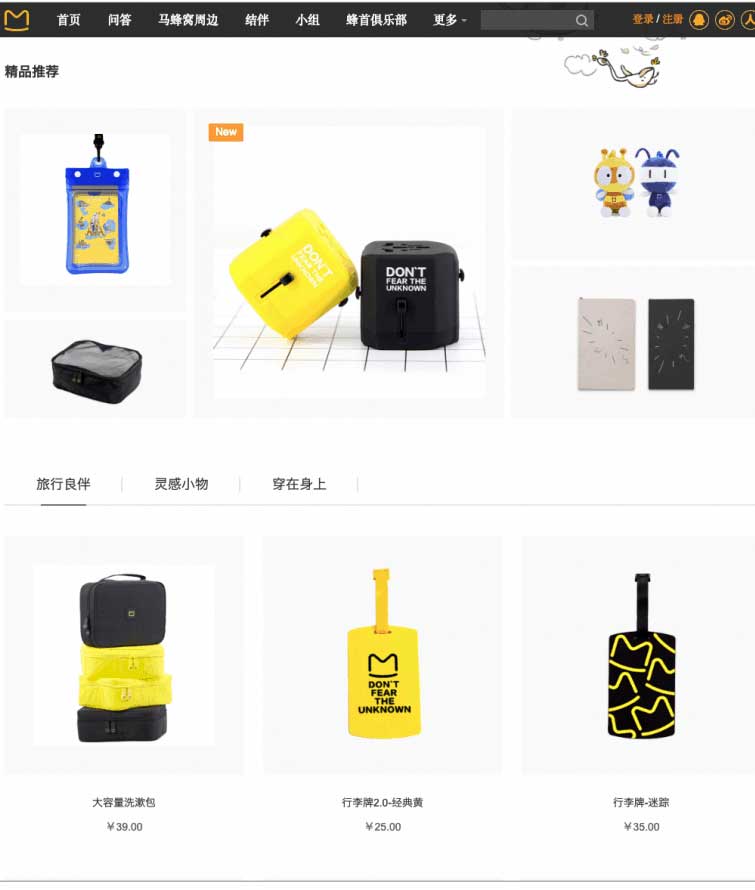
With so many tools the platform has become a sort of traveler bible and is a powerful place to run marketing campaigns focused on content sharing. The best way is to have both an official company account and multiple accounts to go undercover and influence the chat feed, drive chat around your establishment, agency… and create a community around your services.
The bonus? Content on this kind of platform tends to rank quite high on Baidu.
Quyer
Quyer is similar to Mafengwo in terms of content with a forum and Q&A. It was launched in 2004 and has become a to-go place when researching a destination, hotels, restaurants, etc. Over time, like Mafengwo is had developed its own eCommerce and trip-planning tools.
Q&A and Encyclopedia
Once they’ve had their first information about what country is the best to go to, ideally Spain, they will look up an encyclopedia such as.
Baidu Baike will provide them with trustworthy information about the country, it gives them the same feeling as Wikipedia does in Western countries. You must have entries to show how Spain is a great place to go to.
Baidu Zhidao: this is where Chinese outbound tourists will go and ask and answer questions about a given destination. It is very similar to Yahoo! Q&A. There must be a presence to ensure that each question asked about Spain is answered in a very positive manner
E-tourism platforms
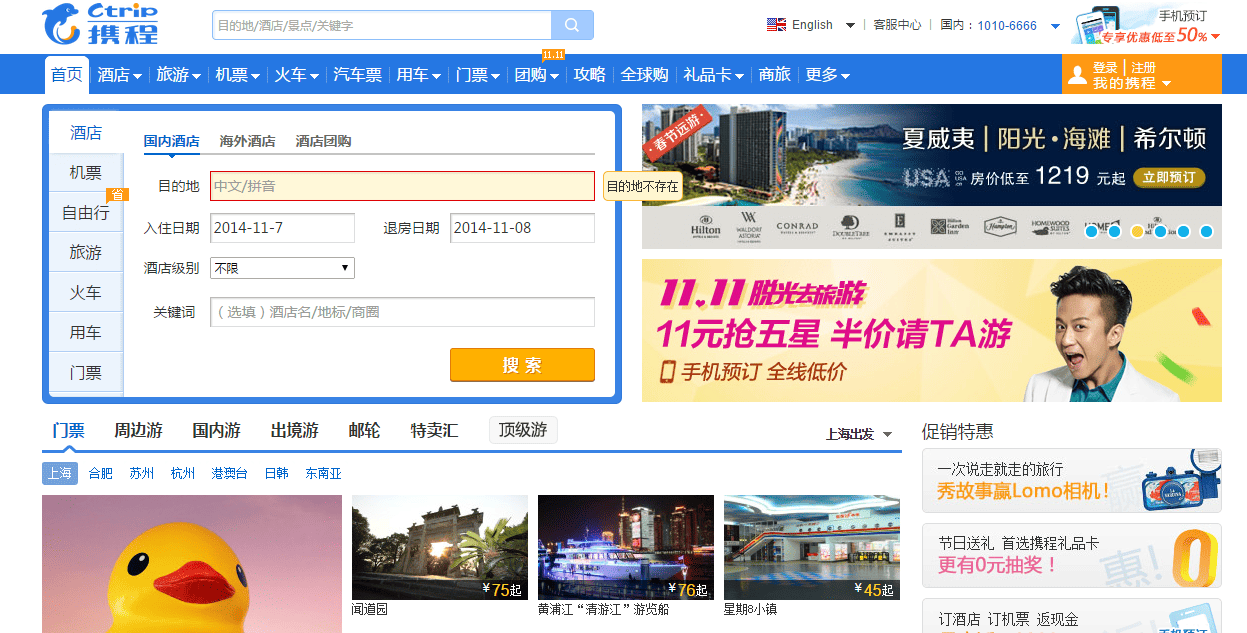
70% of the bookings in Chinese outbound tourism is done on e-tourism platforms such as Ctrip, Elong. To be visible and attract Chinese tourists in Spain, your services and tours must be visible there
Ctrip is the biggest Chinese OTA. And BTW, we can help you with your registration: more info here
Not only Ctrip is a great OTA platform but you can advertise with varied tools such as banners ads and featured posts in different sections of the app. Ctrip also featured Kols. Kols should be taken seriously when doing business in China. They are trusted by their pair a lot more than official resources.
The app has over 10 million POT (point of interest) and targets users on their other apps with DSP (demand-side platform) to help them discovers more POT after they leave the app.
Kols in the tourism industry
Working hand in hand with Kols can help you boost your sales. Why? Kols (key opinion leaders) have the trust of their followers. They know how to maximize engagement and how to create the buzz.
Not only by working with a Kol you’ll get more visibility but also you’ll be associated with this Kol and this Kol credibility. Chinese do not get a lot of vacations. When they decide to go somewhere, they want to make sure it will be a great memorable trip but for the good reason.
Choosing a Kols can be complicated when you don’t know the market, the apps, the prices, and the language. We strongly suggest you hire specialists, the Kols market in China is filled with scammers that take advantage of the naivety of foreign entity.

Mafengwo Kols do not necessarily have a lot of followers however their post can get a lot of views and share and recommendation. Of course, there are super-stars Kols and one might be tempted to hire them but with a superstars Kols that already works with many brands, you take the risk of losing the authenticity feeling that you have with smaller, more “genuine” micro-influencers.
Further information about the destination
They will look up more precise information using keywords pertaining to what they learn from previous sources. Doing an SEO campaign will allow you to increase destination awareness for Chinese tourists. They will think: if a destination ranks well on Baidu it must be a good one.
Multimedia content

After this, they will try to have a more precise image of where they want to go through magazines, blogs, news but most importantly videos like on Youku, the Chinese Youtube. Having a presentation video highlighting the strengths of Spain will raise the destination image in their mind.
During the trip: Social media, photo sharing

Chinese tourists love to share their experience in real time through the use of social media, like Wechat, Weibo, or RenRen. Making sure to leave a good impression is a must here since their user experience spreads like wildfire, especially if they did not have a good experience. Again, with community management, you can ensure that a very good impression of your company is all that tourists can see.
At the end of their trip they will show all their pictures to their friends and leave reviews and comments to let them know about the destination, what they lived and the places they liked most.
Conclusion :
Chinese outbound tourists are hyper connected, a digital marketing strategy using those services is required in order to fully exploit Spain’s great potential as a premium tourist destination for Chinese outbound tourism.

Follow us on
Sources:
- 5 trends about the new Chinese tourist
- What do Chinese tourists want to see in Spain?
- All you need to know about Chinese tourists.
[/et_pb_text][/et_pb_column]
[/et_pb_row]
[/et_pb_section]







Spain is launched by the new young and independent Chinese tourist. Good news I guess for you No?
Spain took a new step to continue to win the growing Chinese tourism with the launch of the website in Mandarin HelloSpain.cn, especially aimed at the new young Chinese tourist, who travels independently and who goes to social networks to plan their travel. http://monliasia.com/en/spain-is-launched-by-the-new-young-and-independent-chinese-tourist/
What are the favorite places for chinese tourist when they come to spain please?
Europe is not as tech-savy as China is. There is a general “mistrust” about technology in latin country such as Sapin, Portugal, Italy and France. Could it be what is attracting Chinese tourists there or it is a prejudice for these countries when compare to Thailand for instance that has fully adopted mobile paiment wechat/alipay, have mandarin speaking staff, services just for Chinese?
You don’t see this as much in Europe. Sure Lafayette now is using alipay but that is a needle in the straw.
I guess my question is do chinese looking look for a “genuine” experience including the struggle of using cash/not speaking the language/not having all their habits tended to or are looking for a travel where they have all the convienence of home, their habits not disturbs in a different landscape?