
How to Lure Chinese Tourists in Brazil
Brazil is the most popular destination in Latin America for Chinese Tourists and you get + 12% Chinese tourists in Brazil every year.

It is a High End Trip.
- 122 million Chinese traveled that year to destinations abroad, up 12% on year.
- A total 6.6 million international travelers visited Brazil in 2016
- 55,000 Chinese citizens visited Brazil last year
- Chinese tourists have spent a total of US$109.8 billion in 2016.
- They spend an average of US$7,000
Brazil Tourism

Brazil possess the largest rainforest on Earth. It has miles of sandy, beatutiful beaches, and stunning flat-topped mountains. It created samba and a special drink called the caipirinha. It has fabulous reserves for native peoples and amazing colonial towns built by the Portuguese.
Tourism is becoming an important industry in Brazil. Rio de Janeiro and São Paulo are both the most visited destinations in the country, offering visitors a wonderful peek into the complex heritage and natural spectacle of Brazil.

Tourism rates sky-rocketed from the year 2000 thanks to awareness of its multifaceted appeal rose. Brazil is the most visited country in the continent of South America today.
in 2016, during the , Brazil saw a record number of international tourists, boosted by the first Olympic Games held in South America.
More than 300 brazilians travel agencies are accredited to receive Chinese tourists in 2017

The Ministry of Tourism of Brazil has licensed 316 Brazilian travel agencies to receive Chinese tourists in Brazil in 2017, a 5% increase compared with 2015.
China is the biggest international source of tourists and a very important market for Brazil.
Accreditation is a requirement of the Chinese government for Brazilian travel agencies wishing to offer packages and receive Chinese tourists in Brazil. To benefit of this new accreditation, companies must to be in good standing in the Registry of individuals and companies operating in the tourism sector, the “Cadastur”, organized by the Ministry of Tourism.
In addition, applicants must declare knowledge of the terms of the Memorandum of Understanding signed between the Ministry of Tourism of Brazil and the National Tourism Administration of China for the facilitation of travel by Chinese tourist groups. Finally, applicants must accept the Disclaimer and request to join the ADS CHINA.
A new China Tourism Office Opens Office in São Paulo

according to Brazilian newspaper DCI Diário Comércio, Indústria & Serviços, São Paulo, Brazil, was the chosen city to receive the first office of the China National Tourist Office (CNTO) in Latin America.
the purpose of opening of the office is to promote a variety of Chinese tourists destinations in Latin America and to upgrade an industry that last year generated the equivalent of 10.26% of China’s Gross Domestic Product (GDP).
China received 138 million foreign tourists in 2016, an increase of 3.8% year-on-year, compared to the 122 million Chinese that travelled that year to destinations abroad, up 12% on year.
the Chinese travelling an average of two to three times a year, which totals 4.4 billion people.
The World Tourism Organisation has said that since 2012, Chinese tourists have spent the most on their trips abroad, with a total of US$109.8 billion in 2016.
Regulation of tourism: a Waiver Visa requirements to boost Brazilian Tourism

The Brazilian government is considering a waiver of visa requirements for visitors from the United States, Japan, Canada and Australia to boost Brazilian tourism, and including China, according to a spokesman of the Tourism Ministry
It could become permanent if there is a significant increase in the number of tourists and the governments of the four countries implement reciprocal measures to remove visa requirements for Brazilian visitors, the spokesman said.

Visitors from most countries in Latin America and the European Union as well as Russia do not need visas to travel to Brazil, but US visitors are required to pay about $160 for a visa to visit the country, an amount that is identical to the amount Brazilians are charged if they wish to travel to the United States.
in the visa waiver plan, to try to attract some of the 100 million Chinese tourists traveling abroad each year, the spokesman said. Only 55,000 Chinese citizens visited Brazil last year but they might be a great boost to the struggling Brazilian tourism.
this year, spending by foreign tourists has amounted to $3.160 billion (2.9044 billion euros), 7% higher than in the same period last year. according to the institute, In the month of August alone the country earned 602 million dollars (553.3 million euros).
Chinese Tourism To Brazil

According to Qyer.com, a popular Chinese travel forum, the most popular destinations in Brazil for Chinese tourists are São Paulo and Rio de Janeiro. The following cities are also popular with Chinese tourists:
- Manaus
- Brasília
- Salvador
- Cataratas do Iguaçú
- Amazon River

Chinese tourists are so important for Brazil. In 2013, tourists from China spent more money abroad than tourists from any other country. Over 83 million Chinese tourists spent USD 102 billion on international travel.
the country participated in the 2013 World Trade Fair in Shanghai helped increase the number of Chinese tourists coming to the country. International advertising of other events hosted by Brazil, such as the 2014 FIFA World Cup and the 2016 Rio Olympics, are also helping to attract Chinese tourists.
Brazil is the favorite destination in Latin America for Chinese tourists, and is positioned 18th in global rankings. One of the main attractions for the Chinese to visit Brazil is Business and International Trade Shows.
Actually, Any country wanting to receive Chinese tourists must sign a “Memorandum of Understanding“in the area of Tourism with the Chinese government, who will then give to the country the status of “Approved Destination Status”. The Memorandum of Understanding also states that only accredited travel and tourism agencies are authorized to receive Chinese tourists in Brazil.
How get more Chinese tourists?

Lead Generation is a new appraoch,it is the method of getting inquiries from potential customers.
Lead generation is a win-win for both the company and client. A client is able to request information from several company that offer the product or service that they are looking for and the company is given the opportunity to introduce their product or service to someone who has given them permission.
Conversion rates on leads that you receive often have a higher conversion success because the prospect is pre-qualified before you ever receive the lead.
Create a Chinese Website
if you want to get more visibility online, it’s important to build a chinese website with a real good content. chinese consumers are always connected on their smartphone. they spend pratically 42% oftheir dailylife on Internet.
it’s important to deeply understand Chinese consumers behaviors in order to design the right site for their necessities.
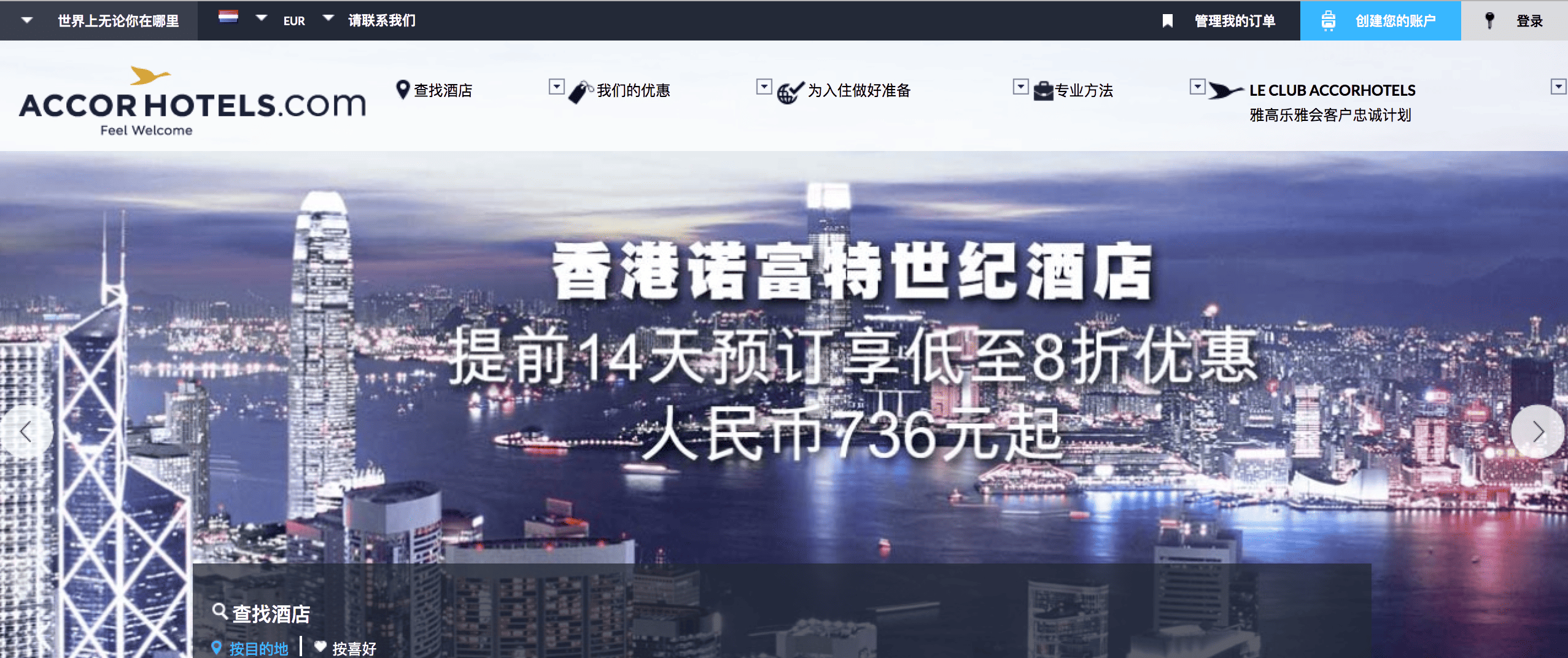
Get more Visibility – Traffic is the base on Online Business
After the creation of your chinese website, it is important to optimize your website and for doing that you have to be ranked high on Baidu. in fact, Baidu is the most used search engine in China and therefore it is the best solution if a travel agency wants to be visible. all western search engines are not available in China.
Baidu owns 82% of the search engine market shares with 800 million mobile search users, so if a travel agency ranks itself on the first or the second page, it will benefit from an enormous traffic.
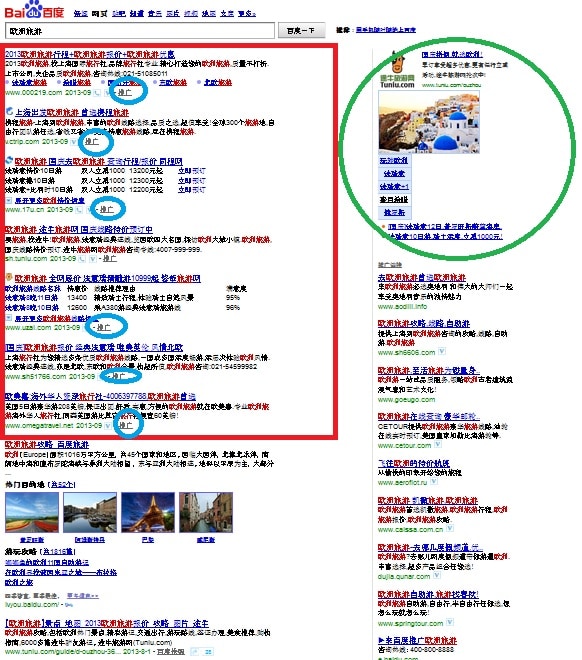
you can be ranked high on Baidu, by using relevant keywords on the website and optimize it for Baidu. you also have to be very accurate in the specific requirements of Baidu which are compatible by the regulations of the Chinese government.
Another thing is to keep in mind in that the process of visibility are internal and external backlinks. you have to integrate them on the website, so Baidu will raise its trust on you. dont forget, you have to use PPC (pay-per-click) which is the process of paying in order to rank high on a set of keywords.
Chinese Social Media : Wechat & Weibo
With over 1.5 billion people living in China, and over 800 million of active internet users, it’s no surprise that digital marketing and building an online presence in China become essential for a brand’s success.
China’s social media universeis very important in the chinese consumers dailylife. forget about it! the government censorship about Facebook, Twitter and Youtube has rendered these services irrelevant and obsolete on the mainland.

Forget Facebook Instagram and twitter
Facebook and many US website are blocked in aChina, so if you’re looking to enter China and develop a digital marketing strategy turn your attention to their equivalents(Wechat, Weibo, QQ, Douban …) which are very popular in the landscape through the creation of China specific networking eco-systems.
Weibo is China’s answer to Twitter, there is freely able to view and comment on any of its 500 million users’ posts, whether they’re directly connected to them or not. Weibo is a critical weapon for tourism agency in China due to its open platform structure and familiar format to Twitter. it is a good starting point for any Brazilian Tourism professional looking to enter the Chinese digital marketing space and increase service awareness.
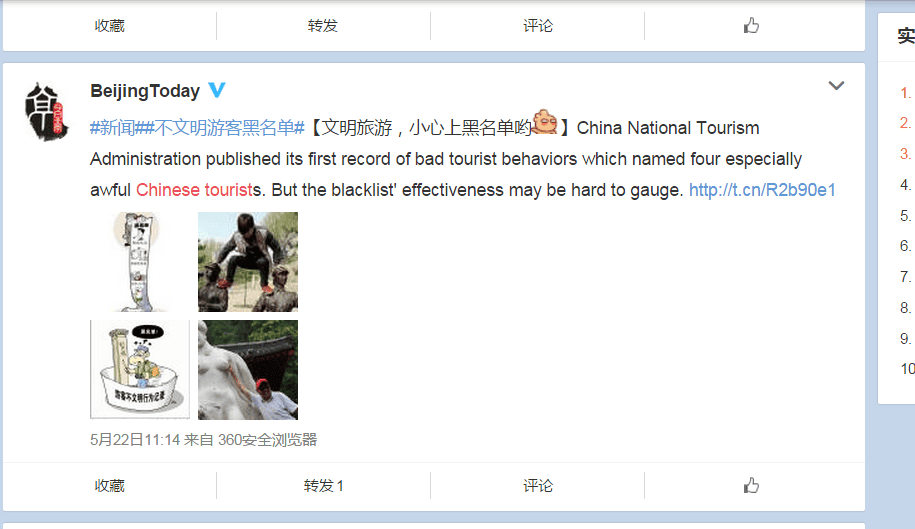
Wechat is the largest social media network with over 768 million active users. WeChat users are able to do everything: purchase online, follow official accounts of brands and celebrities, pay their bills, order a taxi and book a reservation at a restaurant using geolocation technology… WeChat and its biggest competitor Weibo is that unlike Weibo’s open platform approach, WeChat adopts a closed platform strategy for its users.
Read also:
E-reputation : No trust no Business in China

Find a Partner in China : You will lose too much time alone

About Us
- we are an agency that specialize in providing qualified leads to businesses.
- The process of lead generation is actually very easy. our agency can develop your website in which we promote and advertise your product or service.
- A consumer finds these directories or informational sites and they are able to complete an online quote request form.
- don’t hesitate! just contact us and let’s talk about your project






Hi,
We are a OTA, and we are searching partner in Brazil , Travel Agents, Hotels that are able to handle Chinese Travellers
Communication in Chinese
Using WeChat better than email
Send Website in Chinese better, and your offer, packages in Chinese or video.
Hello
we are a small bed and breakfast in Sao Paulo and would like a partner
to promote in china seeing the fast growth of tourists from there
this has been so helpfull.
Hello
Brazil has so much to offer to tourists specially chinese tourists
since there is so much natural beauty and great hospitality
im glad its being noticed.
Wow 66M tourists from China in 2016 that sounds great
I hope my country would advertise to the chinese market on that amount.
Hello
Brazil is one of the biggest tourism markets in the world and its been great that
the chinese market has taken a liking for our colective offer as a country.
Helloo
I live in Brasilia and we could benefit from a full article of promotion for our city
how can we contact you for a piece?
Hello
Having been there in Brazil myself I can honestly say that they have catered their tourist spots to be very friendly towards Chinese tourists , it made my trip so much easier.
Greetings
Brazil has been great for tourists for a lot of years ,
they are one of the many tourism leaders across the globe.
Greetings
it is great to see how the Chinese market is helping the rest of the
world!!
Greetings
I have lived in Rio the last 10 years
and work for a chain hotel near the beach
tourism is the oxygen of this country!! thanks for the piece!