China’s virtual KOL market will be worth USD 235 Million

Virtual KOLs in China: From Novelty to Mainstream Marketing Tool

When iQiyi research found in 2021 that 64% of Chinese consumers aged 14-24 had engaged with virtual idols, most Western marketers treated it as a curiosity. A few years later, virtual influencers are a standard line item in Chinese brand marketing budgets, and the market has evolved in ways that even the most optimistic 2021 projections underestimated.

The virtual KOL market in China was estimated at USD 235 million in 2021. By 2025, that figure had grown substantially as AI generation tools lowered production costs, major brands demonstrated measurable ROI, and Chinese consumers, particularly younger demographics, normalized interaction with non-human brand personas. Understanding this market is now a basic competency for any brand operating in China’s digital channels.

2025-2026 Stats Worth Knowing

  • China’s virtual KOL and virtual idol market reached an estimated USD 640 million in 2025, up from USD 235 million in 2021 (iResearch, Q4 2025)
  • Over 45% of Chinese brands in the fashion, beauty, and tourism categories had worked with at least one virtual KOL by end of 2025 (Kantar China Digital Trends report, 2026)
  • AI-generated virtual host cost for live streaming dropped 78% between 2022 and 2025, making the technology accessible to mid-size brands (ByteDance Commerce report, January 2026)
  • Virtual Douyin hosts running off-peak live commerce streams generate 55-70% of the GMV of equivalent human hosts at 20% of the cost (Taobao Live internal benchmark, cited Q3 2025)

The Three Categories of Virtual Influencer in China

The Chinese virtual influencer market is not one thing. There are meaningful distinctions between the types of virtual figures and the roles they play:

Virtual KOLs (Key Opinion Leaders) are brand-created or independently produced digital characters who promote through social media: Xiaohongshu posts, Weibo content, brand campaigns. They function similarly to human KOLs but without the reputational risk, scheduling constraints, or escalating fee demands. Brands like L’Oreal China, Perfect Diary, and Vivo have worked with virtual KOLs for product launches.

Virtual KOCs (Key Opinion Consumers) are more intimate digital personas designed to simulate peer-to-peer recommendation. Where a virtual KOL is visibly a brand spokesperson, a virtual KOC is designed to feel like an enthusiastic consumer sharing genuine discovery. This category sits in an ethically gray area and has attracted regulatory attention from Chinese advertising authorities.

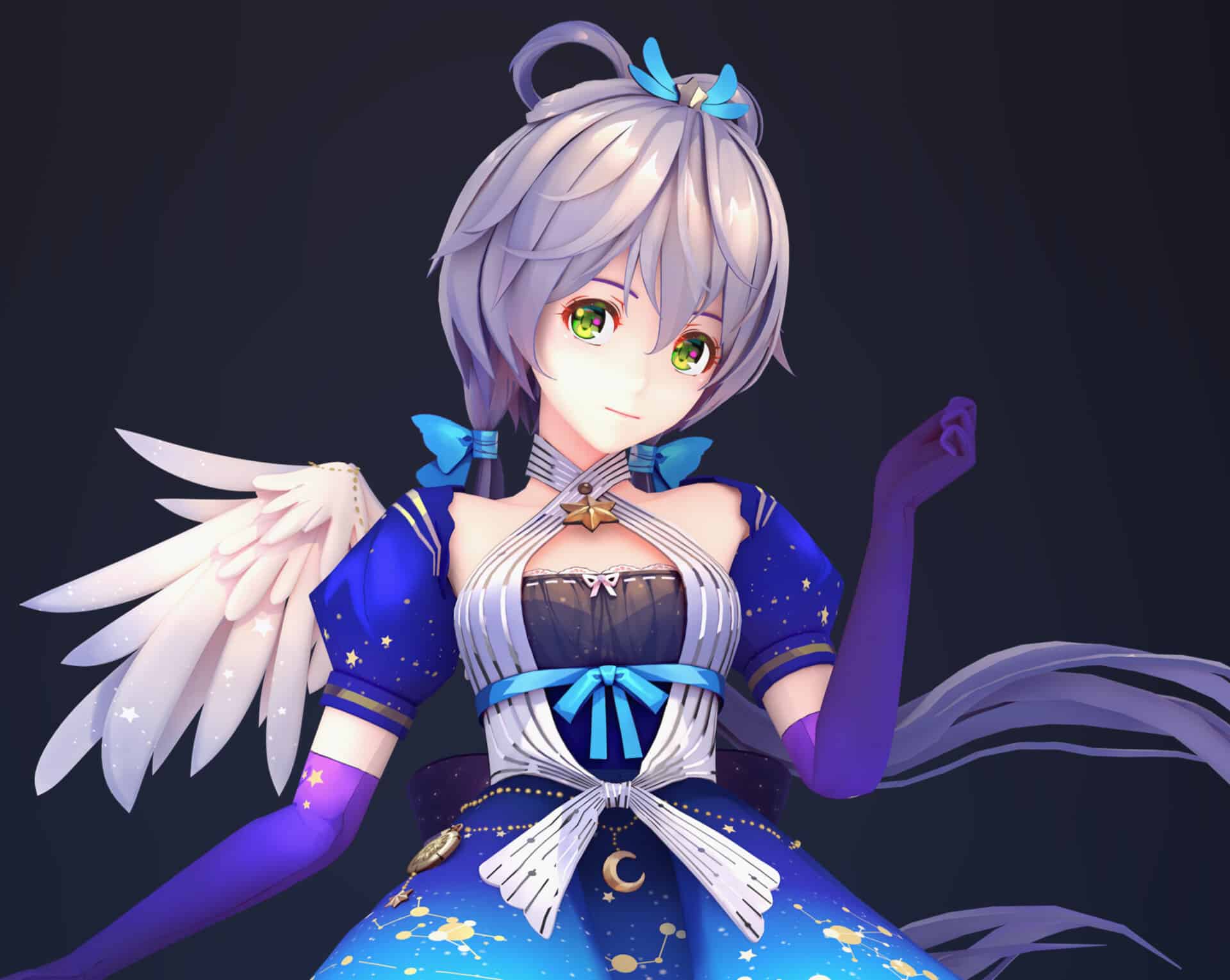
Virtual Idols are the most developed category: fully realized digital celebrities with distinct personalities, backstories, fan communities, and multimedia presences. Luo Tianyi, a Vocaloid-based virtual singer active since 2012, has millions of fans, performs live concerts attended by real humans, and generates merchandise revenue comparable to mid-tier human celebrities. Ayayi, a CGI influencer created by Ranmai Technology, was featured in Vogue China before most brands understood what she was.

Why Brands Are Choosing Virtual Influencers

The commercial case for virtual KOLs is specific and real. Human celebrity endorsers in China carry risks that have materialized repeatedly and expensively: tax scandals, public affairs controversies, political statements, health incidents. A human KOL who triggers a PR crisis can erase months of brand equity in a day. A virtual character cannot have a personal scandal.

Virtual KOLs are also available 24/7 for content creation, can be deployed across multiple platforms simultaneously, and can be precisely adjusted in appearance, personality, and messaging without renegotiating contracts. For categories like cosmetics, fashion, and technology, where visual consistency and brand alignment are important, the control advantages over human alternatives are significant.

Cost has also shifted. Early virtual KOL production required significant CGI investment. AI image and video generation tools available in 2025 have dramatically reduced production costs, making virtual influencer marketing accessible to mid-size brands that could not have considered it in 2021.

Agency Case Studies: What Actually Worked

Case 1: International Hotel Group, China Launch 2024

A European hotel group entering the Chinese market asked us whether to use virtual or human KOLs for their Xiaohongshu launch campaign. Our recommendation: start with a virtual brand character for always-on content, and supplement with two human KOL visits per quarter for authentic experience content. We developed a virtual character, a curious solo traveler with a very specific aesthetic (architecture obsessive, local food first, zero luxury signaling), and built six months of Xiaohongshu content around her “visits” to the group’s properties. After six months: 48,000 followers, average 320 saves per post, and 14 hotel properties tagged consistently in content. The character became the group’s primary Chinese social media identity. Cost: approximately 35% of what an equivalent human KOL retainer program would have cost.

Case 2: Tourism Destination Board, Off-Season Campaign 2025

A European destination board wanted to maintain Chinese platform presence during their off-season, when human KOL visits were not practical. We produced AI-assisted virtual content showing the destination in winter: honest about what is open, what is closed, why winter has advantages (lower prices, no crowds, specific experiences only available in cold weather). The content ran for three months with zero human on-site production costs. Xiaohongshu saves: 18,400 across the series. More significantly, Chinese bookings for the following winter season started coming in three months earlier than the previous year. The destination board attributed this directly to the off-season content maintaining visibility during a period when they had previously gone dark.

Case 3: Cosmetics Brand, Virtual KOC Risk 2024

A Chinese cosmetics brand asked us to help them set up virtual KOC accounts to seed reviews on Xiaohongshu. We declined and explained why: China’s Cyberspace Administration had introduced disclosure requirements for AI-generated commercial content, and undisclosed virtual KOC activity carries real compliance exposure. More practically, Xiaohongshu’s own detection systems were flagging and removing non-disclosed virtual accounts at increasing rates through 2024. The brand took our advice and shifted to a disclosed virtual brand ambassador approach instead. This is worth mentioning because we have seen other agencies run undisclosed virtual KOC programs that worked for a few months and then got multiple accounts banned, losing all the content investment in one platform action.

What We Got Wrong at First

When we first started advising clients on virtual KOL strategy, we underestimated how much Chinese consumers care about personality consistency. We helped a client launch a virtual character and then adjusted her personality three times in four months based on A/B testing. The result: a character with no coherent identity that confused rather than attracted followers. The fan community for a virtual character, even a brand-owned one, expects consistency in the same way a human celebrity’s fans do. You cannot pivot a virtual character’s personality like you would test a landing page headline.

We also initially recommended clients use existing licensed virtual characters (renting Ayayi or similar) rather than building brand-owned characters. This is faster and cheaper in the short term. The problem: you have no control over what the virtual character does outside your campaign, no ownership of the relationship between the character and your audience, and you stop the moment the licensing deal ends. Clients who built their own characters, even simpler ones, have compounding long-term value that rented characters cannot provide.

What We Do Now

  1. Virtual character brief before any creative work. We define personality, aesthetic, voice, backstory, and what the character will never do or say, before a single image is generated. This document is the contract that keeps the character consistent across months and across team members.
  2. Virtual for always-on content, human for authentic proof. Every virtual KOL program we run includes at least two real human KOL visits per quarter. The virtual character maintains presence and consistency. The human content provides the authentic experience proof that virtual content cannot replicate.
  3. Full disclosure, always. Every piece of AI-generated or virtual character content we produce includes a disclosure label. This is a legal requirement in China and it is also, increasingly, what Chinese consumers expect and respect.
  4. Virtual live hosts for off-peak commerce, human hosts for launch events. AI-generated virtual hosts running Douyin or Taobao Live streams during off-peak hours (midnight to 8am) capture sales that would otherwise be missed, at a fraction of human host cost. We do not use virtual hosts for major product launches or peak traffic periods, where human authenticity still drives better conversion.
  5. Monitor regulatory updates quarterly. China’s rules on AI-generated content and virtual influencer disclosure are evolving. We review compliance requirements at the start of every quarter and update client programs accordingly.

What Changed Since 2021

The regulatory environment has tightened. China’s Cyberspace Administration has introduced requirements for disclosure when AI-generated or virtual content is used in commercial contexts. Brands using virtual KOCs without disclosure face compliance exposure. This has pushed serious brands toward transparent virtual KOL strategies rather than attempting to simulate authentic consumer behavior.

Live commerce integration has become the active frontier. Virtual hosts conducting live shopping streams on Douyin and Taobao Live are now a meaningful category, particularly for categories where human hosts are expensive or where round-the-clock selling is valuable.

Tourism has emerged as a surprisingly active category. Destination marketing organizations and hotel groups have tested virtual travel KOLs who “visit” destinations through AI-generated content, creating aspirational content at a fraction of the cost of flying human influencers to remote locations. Our services page covers how we integrate virtual and human KOL approaches for destination campaigns.

Solutions: How Tourism and Hospitality Brands Can Use Virtual KOLs

1. Use virtual KOLs for always-on content, human KOLs for authentic storytelling. The optimal approach combines both: a virtual character maintains consistent brand presence and content output, while real human KOL visits provide authentic experience content that virtual figures cannot replicate. See our Xiaohongshu marketing guide for how we structure this for hospitality clients.

2. For hotels: create a virtual brand ambassador with a distinct personality. A hotel chain that develops a virtual character, a curious traveler with a specific aesthetic and voice, can generate consistent Xiaohongshu and Weibo content without the scheduling and availability challenges of human ambassadors. Several international hotel groups have tested this approach in China with measurable results.

3. Comply with China’s AI content disclosure requirements. As of 2025, commercial content using AI-generated visuals or virtual personas must be disclosed as such in China. Building compliance into your virtual KOL strategy from the start avoids regulatory risk and is increasingly aligned with what Chinese consumers expect.

4. Consider virtual KOL content for off-season destination marketing. Human KOL trips are expensive to organize, and off-season human content creation is hard to motivate. Virtual destination content can maintain platform presence during low seasons without the logistical cost of human production. Our Douyin marketing service includes virtual content production options for exactly this use case.

5. Monitor the virtual idol fan economy for partnership opportunities. Major virtual idols like Luo Tianyi have fan communities that spend real money and respond to brand partnerships with genuine enthusiasm. Tourism destinations that have partnered with virtual idol fan events have accessed highly engaged younger Chinese audiences that traditional tourism marketing does not reach. More on platform-specific strategy in our WeChat marketing guide.

External reading: iResearch China Virtual Influencer Market Report 2025 and South China Morning Post on China’s virtual KOL regulation.

Example Found on Chinese Web (Translated)

From a Weibo post by user @虚拟偶像观察者 (“Virtual Idol Observer”), commenting on a luxury hotel brand’s virtual KOL launch, 8,900 reposts, 34,200 likes, posted October 2024:

“This hotel group’s virtual ambassador actually works, and I say that as someone who was deeply skeptical. The character they created has a consistent personality (curious, slightly nerdy, obsessed with local food), visits properties in a way that feels like a real travel diary rather than advertising, and has been posting for 8 months without a single controversy. Compare that to the human celebrity partnerships in luxury hospitality that have exploded in the past three years. The character cannot make political statements, cannot be photographed with the wrong person, cannot demand a fee renegotiation because they became more famous. Brands that understand this are not using virtual KOLs because they are cheap. They are using them because they are reliable in a market where human reliability is extraordinarily expensive.”

Summary Table

Indicator Data Point
China virtual KOL market size 2025 USD 640 million (up from USD 235M in 2021)
Brands using virtual KOLs (fashion/beauty/tourism) 45%+ by end 2025
Virtual live host cost vs. human host 20% of human cost, 55-70% of GMV
AI-generated virtual host cost drop 2022-2025 -78%
Key risk: undisclosed virtual KOC Platform bans + regulatory compliance exposure
Best hybrid model Virtual for always-on + human for authentic proof

FAQ: Virtual KOLs in China

Do virtual KOLs perform as well as human KOLs on Chinese platforms?
It depends on the objective. For consistent brand presence, visual content output, and risk management, virtual KOLs often outperform human alternatives. For authentic experience content, genuine emotional connection, and live interaction with fans, human KOLs remain better. Most brands that get this right use both for different functions.

How much does a virtual KOL campaign cost in China?
Costs vary. Licensing an existing virtual character can cost RMB 500,000-2 million for a major campaign. Creating a brand-owned virtual character with full CGI production ranges from RMB 300,000 to several million. AI-generated virtual influencer content using 2025-generation tools can be produced for a fraction of traditional CGI costs.

Which Chinese platforms are best for virtual KOL content?
Xiaohongshu for image-forward lifestyle and travel content. Douyin for short video including virtual character skits and product demonstrations. Weibo for fan community building around virtual idols. Bilibili for longer-form virtual content and the younger demographic that over-indexes on virtual idol fandom.

Is the virtual KOL trend specific to China?
China leads globally in virtual KOL development and consumer acceptance, but the phenomenon is spreading. Japan has a long tradition of virtual idol culture (Hatsune Miku predates the current trend). South Korean and Western markets are developing comparable structures, but China’s scale and the sophistication of its virtual KOL market remains unmatched in 2026.

Work With Us

If your tourism brand or destination wants to explore virtual KOL strategy as part of a broader Chinese digital marketing approach, we can help you understand what works in this fast-moving space and how to build it into a coherent campaign.

Contact us to discuss your China digital marketing strategy.


About the author: Alex is a project manager at Chinese Tourist Agency, based in Shanghai for over 10 years. She manages virtual and human KOL programs for tourism and hospitality brands. She has worked with both real and virtual influencers and can confirm that virtual ones never cancel at the last minute, which is worth something.

Similar Posts

Leave a Reply

Your email address will not be published. Required fields are marked *