Why Chinese Travelers Are Choosing Safari Lodges and Egypt Over the Old Group Tour in 2026
I got a call last month from a lodge manager in Kenya. He asked me one question: why are his Chinese guests suddenly booking direct, no agency, no group code, just an email in careful English asking about tent size and mosquito nets. I told him: welcome to 2026.
I spent ten years watching how Chinese people travel. First at CITS, the big state operator, where every itinerary had forty people and one flag. Then at Ctrip, on the acquisition side, where I watched the FIT number, free independent traveler, climb every quarter. Africa and Egypt were never on that list. Group tours went, sure, but always the same six countries. Now the list has changed, and it changed fast.
The numbers nobody expected
Egypt’s tourism authority is aiming for one million Chinese visitors in 2026. That is close to three times last year’s number, and hotel booking data out of Cairo and the Red Sea resorts shows the same jump. TTG China reported the same target directly from Egyptian tourism officials. China is now Egypt’s second biggest source market, right behind Russia. That is not a small country result. That is a market shift.
Safari is doing the same thing from a smaller base. Ctrip’s own booking data shows orders to Africa up sharply in just two months, with Morocco up 66%, South Africa up 46%, Kenya up 55%. 36Kr wrote a good piece on this, calling Africa the new top of the Chinese travel hierarchy. The core buyers are 30 to 49 years old, with money and a passport already full of stamps from Japan, Thailand, Europe. They are not first time travelers. They are looking for something their friends have not posted yet.
Small detail that tells the real story: trip length. Chinese travelers to Egypt now prefer 7 to 10 day trips, not the old 5 day flag tour. That is a different kind of guest. Longer stay, more spending per person, more time to notice if your hotel gets the details wrong.
This is not the tour group you remember
At CITS, safari did not even have a product code. Nobody sold it because nobody asked for it. At Ctrip, years later, I watched search volume for safari and Egypt climb months before supply caught up. That gap is exactly where independent booking grows. People search, cannot find a packaged answer, and book direct instead.
The old group tour had a flag, a fixed hotel block, and a shopping stop that paid the guide’s salary. The new traveler is a couple, or a family of three, or two friends splitting a lodge suite. They book their own flights, they research on Xiaohongshu for two weeks before deciding, and they expect you to answer questions the old group tour never had to answer: is it safe, what visa do I need, will there be WiFi at the lodge, can I pay with Alipay.
This is the same shift I saw happen to Japan and Iceland five years ago. Niche long-haul destinations go from group-tour-only to independent-traveler-first in about eighteen months once the content reaches critical mass on Xiaohongshu. Egypt and East Africa are in that window right now.
What lodges and hotels are getting right, and wrong
Right: some safari camps have started replying in Chinese on WeChat, and a few have hired one Mandarin-speaking guide for peak season. Smart move, cheap to do, big return.
Wrong: most still price only in USD or EUR, with no UnionPay or Alipay option at checkout. Most have no verified Xiaohongshu account at all. I checked twenty safari lodge websites last week for a client project. Three had any Chinese language content. One had a verified RED account. That is the gap, and it is why our hotel marketing work in China usually starts with the booking flow before it touches content at all. No point driving traffic to a page that cannot take the payment.

The Xiaohongshu play
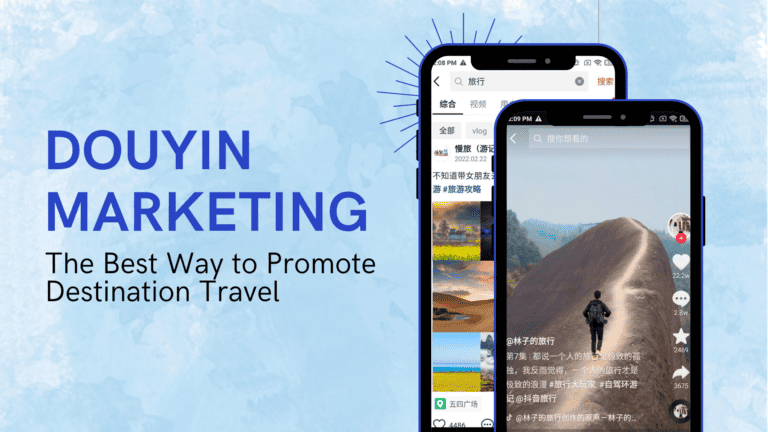
If you run a safari lodge or a hotel in Egypt and you ask me where to put your first dollar, I say Xiaohongshu, every time. Here is exactly how we would build it.
Content: safari and desert were made for RED
RED is a visual platform first, search engine second. Safari gives you the golden hour giraffe shot, the elephant next to the jeep, the tent with a view nobody at home has. Egypt gives you the hot air balloon over Luxor at sunrise, the empty white desert, the Nile at dusk. This content does not need a big budget. It needs the right fifteen seconds, shot at the right hour, posted with the right first line.
Rule I give every client: one strong video beats ten average photos. Video completion rate is what RED’s algorithm rewards most right now. A sunrise balloon launch, filmed in one continuous shot with no cuts, will outperform a curated photo grid nine times out of ten.
Picking the right KOC
Do not hire the mega KOL with two million followers and a paid-read script. For niche long-haul destinations, that content reads as an ad and gets skipped. What works is two or three micro KOC, each with five thousand to fifty thousand followers, each covering a different angle. One outdoor photographer with a visible camera in every video, for the credibility. One “niche destination” account that already posts about places most people have not heard of, for the trust. One budget-focused traveler who breaks down every cost in the caption, because Chinese travelers to Africa and Egypt read the comment section for real numbers before they read the marketing copy.
Engagement rate matters more than follower count here. We look at save rate specifically, how many people bookmarked the note to plan a trip later. That number predicts bookings better than likes ever will. This is the same selection process we use across every destination client, and it is worth reading our full breakdown on how to recruit the right opinion leaders before you sign anyone.
Answering the 听劝 posts
听劝 means, roughly, “listen and be talked into, or out of, something.” A user posts a doubt, sometimes a real fear, and asks the community to weigh in before they decide. For Africa and Egypt, these posts are everywhere right now, because the destinations are new enough that people are genuinely unsure.
第一次去非洲,说实话有点怕,值得吗?跪求大家劝退或者劝入
(Translation: First time going to Africa, honestly a bit scared, is it worth it? Please, everyone, talk me out of it or into it.)
This kind of post gets hundreds of comments. A hotel or lodge that shows up in that comment section, with a real answer about safety, cost, and season, builds more trust in one reply than a month of paid ads. We monitor these threads for clients and draft replies that answer the actual question first, brand second. Nobody wants a sales pitch in a 听劝 thread. They want a straight answer from someone who has actually been.
这个绝了,姐妹们冲!签证很简单,旺季10月到次年4月最舒服
(Translation: This is unreal, sisters, go now! Visa is easy, the best season is October through April.)
That second comment is exactly the tone that converts. Casual, specific, no brand name attached. That is what a good seeded note reads like when it works.
Search optimization for niche long-haul keywords
RED’s search box is where most of these trips actually start, not the explore feed. People type “埃及 红海 潜水 签证” (Egypt Red Sea diving visa), or “肯尼亚 safari 预算 一人” (Kenya safari budget per person), or “埃塞俄比亚 安全吗” (is Ethiopia safe). If your notes do not contain those exact phrases in the title and first line, you do not show up, no matter how good the photo is.
Before peak booking season starts, we seed a set of notes built around these long-tail searches: visa process, budget breakdown by day, best season by region, safety by area, packing list. Not glamorous content, but it is what converts a search into a saved note, and a saved note into a booking three months later. This is the same logic behind our Little Red Book strategy work, applied to a destination that has almost no existing search coverage yet. That is an advantage. Less competition per keyword than Paris or Bangkok will ever have again.
One word you need to know: 小众目的地
小众目的地 (xiǎozhòng mùdìdì) means “niche destination”, literally “small crowd destination.” It is the opposite of 大众, the mass-market places everyone already posts about. In 2026, 小众目的地 status is a badge of honor on Xiaohongshu. Being early to a place, before it is crowded, before every account has the same photo, carries real social value. Safari and Egypt fit this perfectly right now. They are known enough to feel safe, unknown enough on RED to feel special. That window will not stay open forever. In two years these will be 大众 destinations too, and the content strategy will need to change again.
What we tell our hotel and lodge clients
- Get a verified Xiaohongshu account running before peak season starts, not during it. Verification takes time and an unverified account gets far less trust from users.
- Reply to 听劝 threads yourself, not just your own posts. This is where trust gets built, in public, in someone else’s comment section.
- Train front desk staff on five safety-related phrases in Mandarin, minimum. Guests ask, and a blank stare loses the booking that a group tour used to guarantee you.
- Add UnionPay or Alipay if you can. It sounds small. It is not small to the guest deciding between your lodge and the one down the road.
- Work with two or three micro KOC per season instead of one big name. Better coverage, better trust, usually cheaper too.
None of this needs a huge budget. It needs someone who understands both sides, the lodge and the traveler searching for it at midnight on their phone. That is the work we do for hotels and destinations across our destination marketing service, and it is exactly the kind of gap I saw coming back when the search volume showed up on my Ctrip dashboard before the product did.
The lodge manager in Kenya who called me last month, he sent a follow-up two weeks later. Booked out through November, mostly Chinese guests, mostly direct. He asked how long this would last. I told him: long enough if you move now, not long enough if you wait for the group tours to catch up. They always catch up last.

Pedro Wang is the founder of Chinese Tourists Agency, based in Shanghai. He spent ten years in the Chinese travel industry at CITS and Ctrip before opening the agency. More about Pedro and the team here.