
Australia does not want Chinese students anymore
Australia says all Chinese students are a threat to its national security
Scott Morrison, the Australian Prime Minister, is clear on one point: all Chinese students are a threat to Australia’s national security.
China is protesting against Australia’s decision not to accept Chinese students who flew to Sydney to learn that they were subject to mandatory military training at Chinese universities.
Chinese Foreign Ministry spokesman Wang Wenbin said many Chinese students had had their visas revoked and were being repatriated to their country.
Wang complained that Australia’s behavior was contrary to people-to-people interaction and win-win cooperation.
A spokesman for the Australian Border Force said it would not comment on individual cases. Australia can cancel visas at the border if the traveler provides false information.
A spokesperson said: “We are committed to facilitating the entry of legitimate visa holders into Australia and will not hesitate, where appropriate, to use our powers to protect Australia’s national interest.*
What does this do to all Chinese students?
Australia’s latest move is now detrimental to almost all Chinese students.
Wenbin said that Australian border officials considered the mandatory military training provided by Chinese universities to be equivalent to real military training. Even if the PLA was not involved, they were still in trouble.
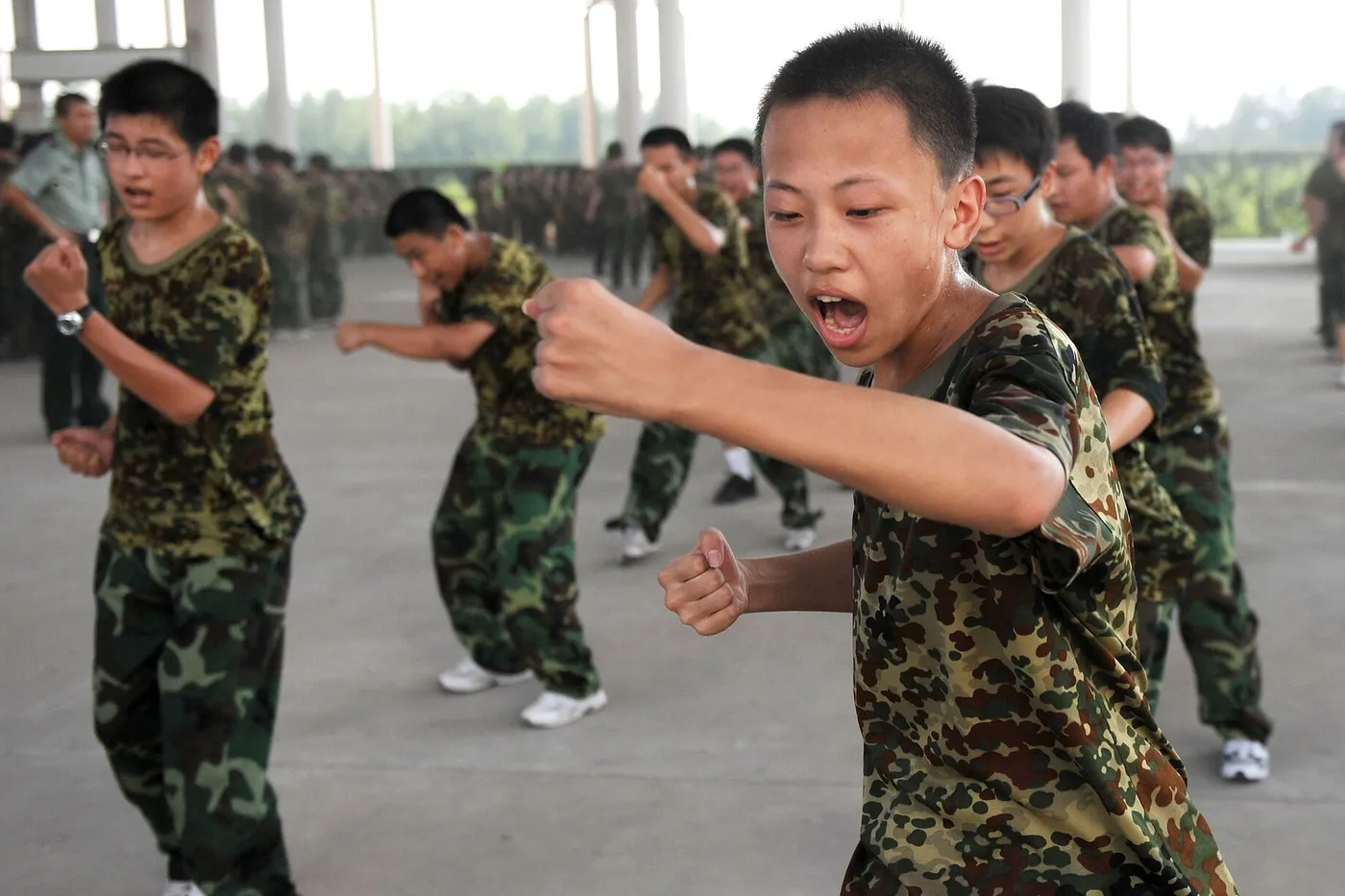
This is a constant threat to many Chinese students. Chinese students have to take a military course at university. The duration of military training is usually between 7 and 24 days. The CCP sees this as a way to strengthen the loyalty of Chinese youth.
China does not consider this course to be conventional military training, although it may be part of Beijing’s civil/military fusion strategy.
This is the latest example set by Australian border personnel. This is a strong example for students who want to go to Australia in the future.
Chinese students have two options:
– Mention mandatory military training at the university level in visa applications. The application may be rejected at the scrutiny stage.
– Hide this information. Australia may reject them on arrival.
This effectively means that Canberra has imposed a blanket ban on Australian students.
China and Chinese students have everything to lose in both cases. China has been pushing its propaganda in Australian universities for several years. Worse still, Chinese students affiliated with the military are trying to steal sensitive Australian technology and military secrets.
Scott Morrison is a strong supporter of China. His mission is to stop Chinese sabotage in Australia.
Female dominance of Chinese students studying abroad
More and more women are pursuing international education in Australia. The number one country for international students is China.
The Lygon Group has released a new report which reveals that female international students have increased by 22% in Australia between 2016 and 2020, compared to 18% for male students.
The report found that countries with a dominant female population are more profitable for the Australian economy, offering more international students to Australian communities and workplaces.
The Lygon Group report, “Resilient. Successful. And Stable: A Gendered Approach to International Education Recovery”, suggests that a gendered analysis of international student mobility could contribute to recovery efforts and strategies. This report examines the most recent data to provide a gendered view of Australian international students in the first year after the pandemic.
They stated that “Building an effective and sustainable recovery strategy for Australia’s international education sector requires us to apply a gendered lens to our analysis of how the pandemic affected our international student community in the first year.” This report, which uses the most recent data available (2020), takes a gendered view of how the pandemic has affected our international student community.”
Chinese students are not yet returning to Australia in large numbers
Due to Australia’s strict border controls, nearly two years of international students have been kept out of the country. While the reopening of the border in December was a relief for thousands of students who were unable to return home, it is clear that the true impact of the border closure on student flows to Australia in early 2022 is still being felt.
“What we do know is that Chinese students are not returning in the numbers that many had anticipated.” The report states that China is the largest source of female international students and that there is likely to be a decline in the number of female international students studying in Australia next year.
To put this into context, the size of the Chinese market means that a 7% drop in student numbers in one year would represent a decrease of 11,223 students. This is more than all the Indonesian students who came to Australia in 2019.
A 1% drop in Chinese students represents a significant loss for Australian universities and has implications for Australia’s international student population.
According to the report, “China has been responsible for much of the growth in female student arrivals to Australia.” Women make up over 54% of Chinese international students studying at Australian institutions. This is because the number of Chinese women studying overseas has increased fivefold. Today, 60% of Chinese international students are women.
According to the report, between 2019 and 2020, female enrolment from China decreased by 9%, while male enrolment decreased by 5%. However, more than 10,000 female students enrolled in Chinese schools.
The report states that “with expectations of continued declines in Chinese student enrolments, this gap is expected to narrow over the next few years.”
Greater representation of women in higher education
Globally, female enrolment in higher education has grown almost twice as fast as male enrolment over the past 40 years. This is due to greater equity and access to higher education, increased earning potential, and the internationally recognized imperative to reduce the gender gap at all levels of education.

Despite the decline in student numbers in the first year of the pandemic, Australia has seen a 22% increase in international female students between 2016 and 2020. While the number of female students increased, only 18% of male students experienced a slow increase. Today, Australia has an almost equal number of international students (51%) and 49%).
China and India are the most popular countries of origin for female international students. Together they send over 100,000 students to Australia each year. Seven key markets send more female students than male students to Australia: Vietnam, Singapore and Japan, South Korea, China, Indonesia, Malaysia, and South Korea.
“Between 2000 and 2016, female enrolment in higher education increased by 41 million. This has translated into higher participation rates in this region. According to the report, there are now more girls and women in schools in the Asia-Pacific region than ever before.
In the first year, enrolment in female-dominated markets has remained stable.
Even without their largest contributors, the top five female-dominated countries enroll more than twice as many students in Australia as the top five male-dominated countries. They also offer more economic opportunities to Australia.
Some remain concerned as Chinese students return from Australia to be wooed with in-person tuition, financial benefits, and other luxuries.
Since the pandemic, Australia has seen the largest increase in the number of international students.
However, almost a third of international students (about 120,000) remain in Australia.