
8 Tips to Create a Successful Marketing Campaign in China
You want to enter China, the most Dynamic and competitive Market in the World.
Where should I start ?

Bet on Digital First

Increasing your online presence in the world’s largest internet market
Since the nation opened as many as international expenditure within the 1970s, China has attracted a huge amount of international firms trying to capitalize over the country’s enormous inhabitants, financial advancement and newfound appetite for western purchaser items and companies. Much more lately, the online market place happens to be a large sensation in China with around 54 million end users included in 2013 on your own. The majority of these new end users accessibility the online world from their smartphone.
Go Mobile

Though smartphone penetration is achieving saturation, you can find nevertheless place for advancement. PwC described that while smartphone development is predicted to start out slowing in coming decades, the overall Chinese smartphone inhabitants remains predicted to achieve five hundred million consumers in 2015, expanding more to 600 million end users by 2017.
Having said that, China is usually a quite challenging market to crack. Lots of multi-national companies have experimented with and unsuccessful including the likes of Google, eBay, Residence Depot and Mattel, among others. There are a number of different reasons why these organizations did not achieve China but usually it’s as they failed to analyse the market or obtain an understanding of Chinese lifestyle or person behaviour right before launching merchandise in the region. To prevent these pitfalls, we’ve identified some ideal follow ways to successful electronic advertising and marketing in China.
Do your analysis, Study … and Act Fast
This is applicable to any strategy that the small business decides to put into practice but it is a lot more important when making an attempt to enter a sector as various and complicated as China. Investigate of your respective target industry and viewers, competitor evaluation along with a comprehensive evaluate of the organization’s inner abilities would wish to get conducted to find out if China is often a viable industry for your organization. This might seem clear but you’d be surprised the amount of organizations really do not get this right.
By way of example, Dwelling Depot tried to enter the Chinese market in 2006 and was embarrassingly forced to retreat in 2011. The American retailer of dwelling enhancement and building merchandise blamed the fact that they misinterpret the country’s hunger for Do-it-yourself. “The marketplace craze says this is certainly more of a do-it-for-me culture,” a house Depot spokeswoman said of China. Marketplace exploration might have saved the company many time and cash.
Communicate Mandarin & trans-create your content

The Chinese expect you to communicate during the local language, Mandarin, if you want to succeed in local consumers. Instead of simply translating your content for use in China, you should transcreate content specifically for Chinese end users. End users in China will have different motivations and concerns, so do your investigation and satisfy their requirements with content created specifically for them.
Website : have a great Website in China

Baidu is the search engine of choice in China with 98% sector share. So in order to increase visibility within your site to Chinese web consumers, you should ensure you satisfy Baidu’s algorithm. One of the key features of Baidu is that it ranks Chinese sites higher in search engine results. This doesn’t just mean that the content needs to generally be translated (or ideally transcreated) into Mandarin, but you should host on a Chinese (.cn) domain name to increase exposure on Baidu.
Host your site locally (in China or Hong Kong)
Chinese online speeds have improved drastically in recent several years and the place enjoys some of faster average mobile data speeds than the UK or US, particularly from the major cities. Despite this, China is around the other site on the world so if your site is hosted in Europe or the US, Chinese consumers will experience significant latency when accessing your site from China.
Slow page load times lead to high bounce rates, lower engagement and lower conversion rates. Hosting your site in China will decrease latency and increase the likelihood of mobile marketing and advertising success. Furthermore, Baidu uses geo-location signals of the web host to find out rankings. So sites hosted in China receive a lot more exposure on Baidu than those that are hosted elsewhere.
Develop a mobile-friendly site and app
In China, if you really don’t offer a mobile or responsive website you’re going being placed at a large disadvantage as 81% of Chinese world-wide-web end users access the web using a mobile device. Furthermore, according to PwC, 70% of smartphone buyers in China used their devices to make purchases at least once a week – double the rate of US customers.
Apps are also a key component to any mobile marketing in China. Chinese end users download an average of 40 apps a year, much more than any other country. Apps are also a great way to collect data from Chinese customers and a staggering 98% of Chinese consumers are happy to share personal data if they are able to receive relevant, targeted advertising. Nonetheless, you should ensure that you really do not charge users to use your app to increase success. In excess of 90% of apps downloaded in China are free to download and use.
Be social (or Die)
Social media is “the big thing” in China.
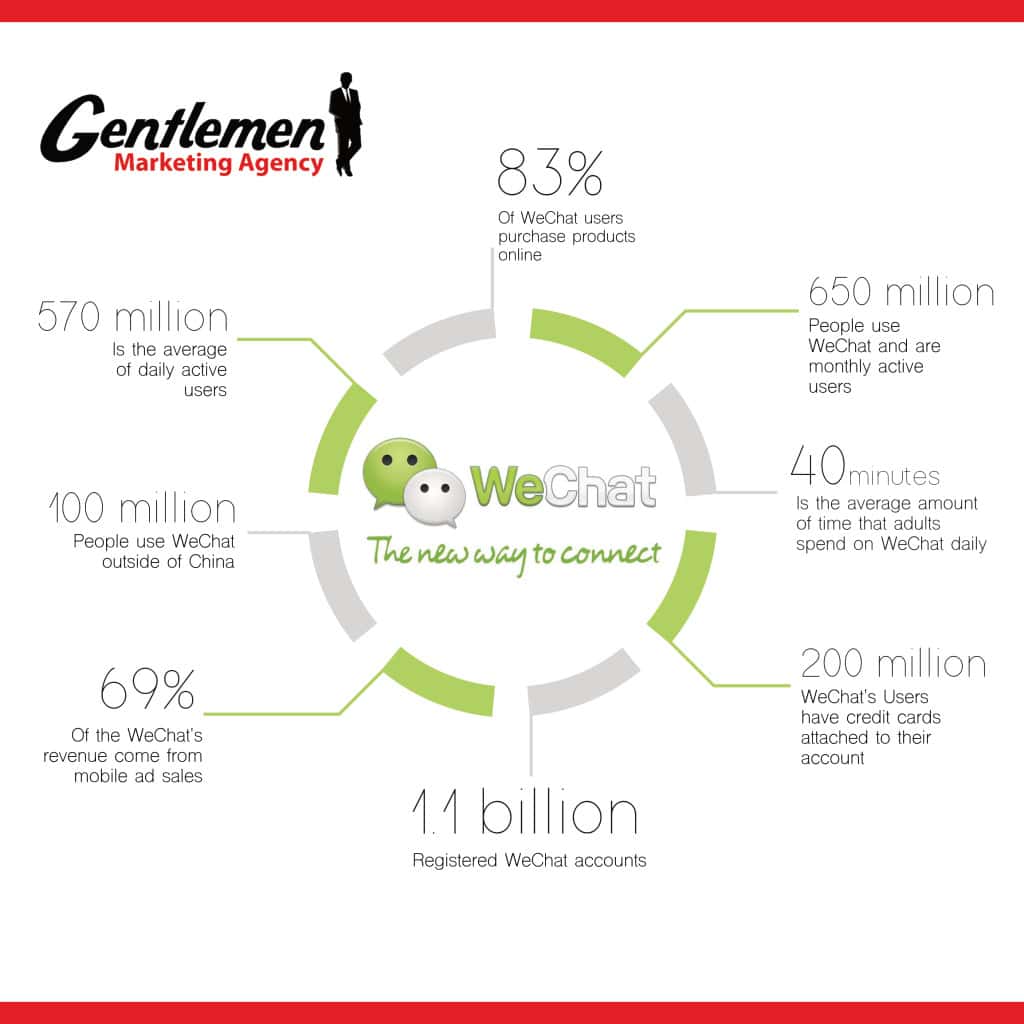
Wechat, the largest social network has more than 900 million active customers – which is a lot more than half of the variety of Facebook customers globally and China is leading the way in social commerce. The local society has a massive influence on how enterprise is done, and the Chinese are incredibly sociable in their organization dealings.
In China, there is certainly a concept known as ‘Guanxi’, which is really a central idea in Chinese culture and has a massive influence on business enterprise. Guanxi encourages building social connections and long term relationships through trust and mutual respect. This might seem trivial but lots of large tech businesses have unsuccessful in China as a result of ignoring this significant cultural phenomenon. For example, when eBay decided to enter the Chinese industry in 2004 by buying a local business called Eachnet, they assumed that their platform was going being an instant success as it had been in numerous western markets.
eBay’s store did not have any systems to facilitate guanxi, unlike their main competitor Taobao, who implemented live chat functionality in order for buyers and sellers to communicate and build trust and rapport. TaoBao, being Chinese, did not underestimate the power of guanxi, and as a result currently holds 96 percent industry share in China. eBay, around the other hand, shut down its Chinese website and issued a formal announcement of its withdrawal from the online auction market place in China.
Be “sexy” , very important in Digital Marketing

Relevance is critical to Digital marketing and advertising success in all the regions that the firm operates. Most Chinese users accessibility the online world through their smartphones and mobile devices allow brands to get much more relevant than ever in advance of. Corporations should rely on customer data to develop personalized brand experiences for Chinese end users. The suitable offer, to the ideal customer, at the correct place, at the right time, is key to ensuring success. So, collect mobile customer data such as location, preferences and purchase history and use it to better focus on your Chinese customers with relevant, timely, personalized content.
Develop a Ecofriendly “mobile system”

As well as following the tips above, you should ensure that you formalize your mobile Digital marketing system and make everyone in your organization aware of it so you can work together to achieve your objectives.
Exploration by Econsultancy in October 2013 found that despite the recent progress in mobile web access and m-commerce, several corporations are still not ready for the mobile revolution despite industry experts predicting for some time that mobile internet would overtake desktop by 2014.
Providers during the Asia-Pacific region appear being most prepared with 52% claiming to have a mobile method compared with just 21% for Europe (excluding the UK).
marketing in China